
Divorce Counselling in Langley & Vancouver
Divorce isn’t just a legal process, it’s the unraveling of a shared life, future, and identity. Whether you’re contemplating separation, navigating the aftermath, or supporting your children through this transition, you don’t have to do it alone.
Serving Langley and the Lower Mainland since 2012
Divorce Counselling
Maybe you wake up at 3 AM with your mind racing through logistics, replaying conversations, wondering if you made the right choice. Or maybe the choice was made for you, and you’re trying to understand how you got here. Your chest feels tight. You’re exhausted but can’t sleep. Simple decisions feel overwhelming because you’re making them alone now. You might be grieving the marriage, or grieving the person you thought your partner was, or grieving the future you’d planned together.
You’ve probably tried to “stay strong” for the kids, or thrown yourself into work, or convinced yourself you should be over this by now. But if it were that simple, you wouldn’t be reading this. Divorce touches every part of your life, your daily routine, your finances, your friendships, your relationship with your children, your sense of who you are. The person who knew you best suddenly doesn’t know you at all.
At Lavender Counselling, we don’t see your struggle through divorce as something to fix or rush through. We see it as your system responding to profound loss, identity shift, and uncertainty, all of which are adaptive responses to one of life’s most significant transitions. Divorce often brings up deeper patterns about attachment, worth, trust, and how we learned to be in relationships. Our approach is to understand what your experience is communicating about your needs, your history, and the life you want to build next.

We serve individuals navigating divorce across Langley, Vancouver, Surrey, and throughout the Lower Mainland, with both in-person and secure virtual counselling options. Please note: We do not provide support for high-conflict divorce situations, which require specialized legal and therapeutic intervention beyond our scope.
Challenges We Help With
Emotional and Psychological Impact
- Intense, unpredictable waves of grief, anger, guilt, relief, or numbness that feel impossible to manage
- Identity confusion, not knowing who you are outside this relationship or the roles you’ve held
- Intrusive thoughts about the past, what you could have done differently, or fears about the future
- Anxiety about starting over, being alone, or navigating a different life stage as a single person
- Depression, loss of interest in things that used to matter, or feeling like you’re just going through the motions
Relational and Family Dynamics
- Navigating co-parenting while processing your own hurt, anger, or disappointment
- Protecting your children from conflict while being honest about the changes happening
- Managing reactions from extended family, mutual friends, or faith communities
- Establishing new boundaries with your ex-partner when you still need to communicate regularly
- Supporting your children’s grief and confusion while managing your own
Daily Life Disruption
- Practical overwhelm, managing finances alone, dividing belongings, establishing new routines
- Difficulty concentrating at work or maintaining professional responsibilities
- Changes in eating, sleeping, or self-care patterns
- Isolation from coupled friends or social circles that feel awkward or judgmental
- Loss of your home, neighborhood, or community ties that grounded you
Internal Conflicts and Questions
- Questioning whether you made the right decision, especially during particularly hard moments
- Guilt about “failing” at marriage or the impact on your children
- Fear of repeating patterns in future relationships
- Shame about needing support or not “moving on” fast enough
- Uncertainty about what you actually want your life to look like now
Physical and Somatic Responses
- Tension in your chest, shoulders, or jaw from carrying stress and uncertainty
- Fatigue that doesn’t improve with rest
- Digestive issues, headaches, or other physical manifestations of emotional strain
- Difficulty regulating your nervous system, feeling constantly on edge or completely shut down
- Body memories of the relationship surfacing unexpectedly
How We Support Divorce Counselling
We approach every person and every story as unique. Your divorce isn’t a checkbox on someone else’s timeline, it’s your experience of loss, change, and eventually, rebuilding. Our work together starts with understanding what this transition means for you specifically, not what divorce “should” look like.
Get to Know the Problem
We begin by understanding your whole story, not just what happened in the marriage, but how you experience the loss now, what patterns might have contributed, and what you’re most afraid of moving forward. This isn’t about assigning blame; it’s about understanding.
"I need to know what this divorce is stirring up for you—what old wounds it's touching, what fears it's activating, what it's teaching you about what you need."
Assess the Root Cause
Divorce often reveals deeper patterns about attachment, self-worth, conflict, intimacy, or how we learned relationships work. We explore what brought you to this point, how your history shows up in your current pain, and what this ending might be asking you to understand about yourself and your needs.
"Sometimes divorce is the consequence of incompatibility. Sometimes it's revealing patterns you learned decades ago about love, safety, or your own worth."
Support From the Bottom Up
Divorce doesn’t just hurt emotionally, it registers in your body as a threat to safety and connection. Your nervous system is responding to the loss of a primary attachment bond, which research shows creates stress responses similar to other significant losses. We may use body-based approaches to help you process what’s happening somatically, not just cognitively. This might mean learning to regulate when panic hits, reconnecting with physical sensations you’ve been avoiding, or rebuilding a sense of groundedness when everything feels unstable.
"Your body remembers the relationship even when your mind has decided it's over. Healing means helping your whole system catch up to your new reality."
Our Approach Helps You:
✓ Process the grief of this loss without rushing or minimizing it
✓ Understand the patterns that contributed to the relationship ending
✓ Navigate co-parenting with clearer boundaries and less reactivity
✓ Rebuild your sense of identity and worth outside the relationship
✓ Develop clarity about what you want in your life moving forward
✓ Support your children through this transition in age-appropriate ways
✓ Move toward acceptance and eventually, openness to what comes next
Our Counselling Team
Our team includes registered clinical counsellors who work with individuals navigating divorce and separation. Collectively, our counsellors have training in various evidence-based approaches including:
- Attachment-based therapy
- Emotion-focused therapy (EFT)
- Trauma-informed approaches
- Person-centered and relational therapy
- AEDP (Accelerated Experiential Dynamic Psychotherapy)
- Somatic and body-based approaches
- Focusing-oriented therapy
- Grief and loss support
Not every counsellor uses every approach, each brings their own combination of training and clinical style.
Our therapists work with:
- Adults navigating divorce or separation
- Individuals in different stages of the process (contemplating, active separation, post-divorce adjustment)
- Parents needing support for themselves and guidance for supporting their children
- People processing relationship patterns, attachment wounds, or identity questions that surface during divorce
Find Your Divorce Counsellor
The right therapeutic relationship is essential for divorce work. Use our therapist selector tool to find counsellors whose expertise, approach, and availability match what you’re looking for.
Why Choose Lavender Counselling for Divorce Counselling?
Relational, Person-Centered Approach
Bottom-Up, Body-Based Healing
Find Your Perfect Fit
Consistent, Quality Care
No Artificial Timelines
Flexible Access
Insurance Coverage
Deep Community Roots
What To Expect In Divorce Counselling

Your First Session
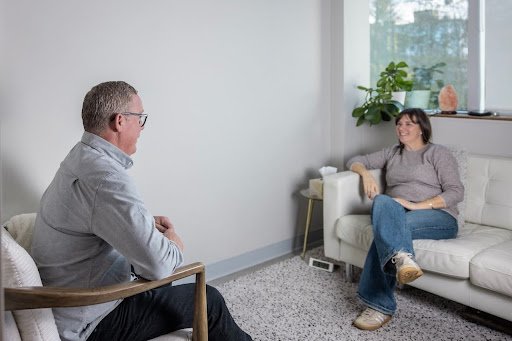
Your first session focuses on understanding where you are in the divorce process, what brought you to counselling, and what you need most right now. Your counsellor will ask about the relationship history, what led to the separation, how you’re managing currently, and what you hope counselling might help with. This isn’t about judging your choices, it’s about understanding your experience so we can support you effectively.
Our Collaborative Approach
Ongoing sessions adapt to where you are in the process. Early on, we might focus on managing acute emotional distress, making immediate decisions about children or living situations, and stabilizing your nervous system. As you move through the transition, we might shift toward understanding deeper relationship patterns, processing grief, rebuilding identity, or developing co-parenting strategies. Your counsellor follows your needs, not a predetermined curriculum.

Confidentiality
Everything you share remains confidential within legal and ethical boundaries. Your counsellor will walk through all of this in your first session so there are no surprises. This matters particularly in divorce work, your counsellor won’t share what you discuss with your ex-partner, family members, or legal representatives unless you specifically request it and provide written consent.

Flexible, Ongoing Support
Some clients need weekly sessions during the most acute phase of separation, then shift to biweekly or monthly as they stabilize. Others need consistent support throughout the legal process and beyond. We adjust frequency based on your needs, not insurance requirements or arbitrary timelines. You’re in control of your care.
Frequently Asked Questions
Absolutely. Many clients come when they’re contemplating divorce but haven’t decided. We help you explore whether the relationship can meet your needs, what patterns are contributing to the problems, and what staying or leaving might mean for you. We don’t push you toward any particular outcome, we help you gain clarity about what’s right for you.
Friends offer valuable support, but they often have investment in a particular outcome or can’t hold the complexity of your experience without judgment. Counselling provides a trained professional who helps you understand underlying patterns, process trauma or attachment wounds that surface, regulate your nervous system, and make decisions aligned with your values, not just vent about what happened.
Yes, though we don’t work with high-conflict divorce situations. If you and your ex-partner can communicate with basic civility but need help with boundaries, reducing reactivity, putting kids’ needs first, or managing triggers, we can support that. High-conflict situations require specialized intervention we don’t provide.
This varies significantly. Some clients need support for 3-6 months during the acute transition. Others work with us for a year or longer, particularly if deeper attachment wounds or relationship patterns surface that they want to address. There’s no set timeline, we work at your pace.
Yes. Many clients prefer virtual sessions for the flexibility and privacy, particularly if they’re managing new living situations or co-parenting schedules. Virtual counselling is secure, confidential, and just as effective as in-person work.
Tell us. You can request to meet with a different counsellor on our team at any point. The therapeutic relationship is the foundation of effective counselling, and we’d rather help you find the right fit than have you continue with someone who doesn’t feel right.
If you’re asking this question, you probably need support. You don’t need to be in crisis to benefit from counselling. If the divorce is affecting your sleep, your relationship with your children, your ability to work, or your sense of yourself, that’s enough. You don’t have to wait until you’re non-functional to ask for help.
No. Your counsellor won’t advocate for reconciliation or divorce, that’s your decision. They won’t take sides about who was “right” in the relationship. What they will do is help you understand your patterns, process your experience, and make decisions aligned with your values and needs.
Yes. Infidelity adds specific layers of betrayal, trauma, and trust wounds to divorce. Many of our counsellors have training in supporting people through this particular kind of relational injury, whether you’re deciding what to do or processing the aftermath.