
Eating Disorders Counselling in Langley & Vancouver
Your relationship with food has become exhausting, and you know something deeper is going on. At Lavender Counselling, we help you understand what your eating patterns are trying to tell you, so you can find your way back to yourself.
Serving Langley and the Lower Mainland since 2012
Eating Disorders
Food has stopped being simple. Maybe it never was. What started as trying to feel in control, or numbing something unbearable, or just wanting to feel okay in your body has taken over your life in ways you didn’t anticipate.
The calculations run constantly, calories, portions, what you ate yesterday, what you’ll “allow” yourself tomorrow. Or maybe the opposite: you feel completely out of control, caught in cycles of restriction and binging that leave you feeling ashamed and alone. You might find yourself cancelling dinner plans because the anxiety of eating with others is too much. Looking in the mirror has become something to avoid.
Here’s what we want you to know: your eating patterns didn’t develop randomly. They emerged for a reason. Perhaps as protection during a time when you had little control over anything else. Perhaps as a way to manage emotions that felt too big. At Lavender Counselling, we don’t approach eating disorders as behaviors that need to be corrected. We see them as communication, your mind and body telling us something important about what you’ve been carrying. And we believe lasting change happens when we address what’s underneath, not just what shows on the surface

Our counsellors work with clients throughout Langley, Vancouver, Surrey, Maple Ridge, and the broader Lower Mainland. We offer both in-person sessions at our Langley and Vancouver offices and secure virtual counselling throughout British Columbia.
Challenges We Help With
Restrictive Patterns
- Rigid rules about “good” and “bad” foods that control your daily life
- Skipping meals or finding elaborate reasons to avoid eating with others
- Feeling a sense of accomplishment from hunger or restriction
- Obsessive calorie counting or portion measuring
- Fear of certain foods or entire food groups
Binge Eating & Loss of Control
- Eating large amounts rapidly, often in secret
- Feeling disconnected or “checked out” while eating
- Using food to numb difficult emotions, then feeling worse afterward
- Shame spirals that lead to more restriction, then more binging
- Hiding food or evidence of eating
Purging & Compensatory Behaviors
- Purging through vomiting, laxatives, or excessive exercise
- Exercising to “earn” food or “undo” eating
- Rigid exercise routines that feel compulsive rather than enjoyable
- Feeling panicked when unable to compensate for eating
Body Image Struggles
- Constant body checking, mirrors, pinching, weighing yourself repeatedly
- Avoiding mirrors, photographs, or situations where you might see your body
- Feeling like your body looks different than what others describe
- Dressing to hide your body or avoid attention
- Self-worth tied almost entirely to weight or appearance
Emotional & Psychological Patterns
- Perfectionism that extends far beyond food
- All-or-nothing thinking about eating, body, and self-worth
- Difficulty identifying or tolerating emotions
- Feeling disconnected from your body and its signals
- Deep shame that you carry alone
Impact on Daily Life
- Social isolation to avoid food-related situations
- Difficulty concentrating due to constant food thoughts
- Relationships strained by secrecy or irritability
- Medical symptoms: fatigue, dizziness, digestive problems, hair loss
- Feeling like your eating disorder has become your whole identity
How We Support Eating Disorders
We approach every person and every story as unique. There’s no single “eating disorder experience.” Some clients come to us in acute crisis, others have been managing quietly for decades. Some have specific diagnoses; others just know something isn’t right. What we offer is a therapeutic relationship built on genuine understanding, not judgment or assumptions about what you “should” be doing.
Get to Know the Problem
Before anything else, we want to understand your experience, not just the behaviors, but the whole picture. How did this begin? What purpose has it served? What does your relationship with food and body actually feel like from the inside?
"We take time to understand the role your eating patterns have played. Often they've been trying to protect you from something."
Assess the Root Cause
Eating disorders rarely exist in isolation. They typically connect to earlier experiences, trauma, attachment disruptions, environments where emotions weren’t safe, pressure to be perfect, or simply never learning to recognize and respond to your body’s signals. We explore these connections not to assign blame, but to understand the full picture.
"When we understand why the eating disorder developed, we can address what's really driving it—not just the symptoms."
Treat From the Bottom Up
Research consistently shows that eating disorders affect how we sense and respond to our own bodies. Interoception, the ability to notice internal signals like hunger, fullness, and emotion, is often disrupted. The stress response becomes dysregulated. Many people with eating disorders describe feeling disconnected from their bodies entirely, or like their body is the enemy.
That’s why we use body-based, “bottom-up” approaches alongside traditional talk therapy. This might include somatic awareness practices, helping you rebuild trust in your body’s signals, and working with the nervous system patterns that keep you stuck in fight, flight, or freeze around food.
"Healing from an eating disorder isn't just about changing thoughts—it's about reconnecting with your body as a safe place to be."
Our Approach Helps You:
✓ Understand the function your eating disorder has served without judgment
✓ Develop a more compassionate relationship with your body
✓ Learn to recognize and respond to hunger, fullness, and emotional cues
✓ Process underlying experiences, trauma, attachment wounds, perfectionism, that fuel disordered eating
✓ Build sustainable ways of coping that don’t require controlling food
✓ Reconnect with parts of your life and identity beyond your eating disorder
Our Counselling Team
Our team includes registered clinical counsellors who work with eating disorders. Each brings unique training and expertise in evidence-based modalities including:
- Trauma-informed and attachment-based therapy
- Somatic and body-centered approaches
- Emotion-focused therapy
- Self-compassion and mindfulness-based approaches
- Person-centered and experiential therapy
Our therapists work with:
- Adults and teens experiencing various forms of disordered eating
- Anorexia, bulimia, binge eating disorder, ARFID, and OSFED
- Those in recovery seeking ongoing support
- Clients managing co-occurring concerns like anxiety, depression, or trauma
Find Your Counsellor
The right therapeutic relationship is essential for eating disorders work. Effective support requires deep trust, the kind that only develops when you feel truly seen and accepted by your therapist. Use our therapist selector tool to find counsellors whose expertise, approach, and availability match what you’re looking for.
Why Choose Lavender Counselling for Eating Disorders?
Relational, Person-Centered Approach
Bottom-Up, Body-Based Support
Find Your Perfect Fit
Consistent, Quality Care
No Artificial Timelines
Flexible Access
Insurance Coverage
Deep Community Roots
What To Expect In Eating Disorders Counselling
Your First Session
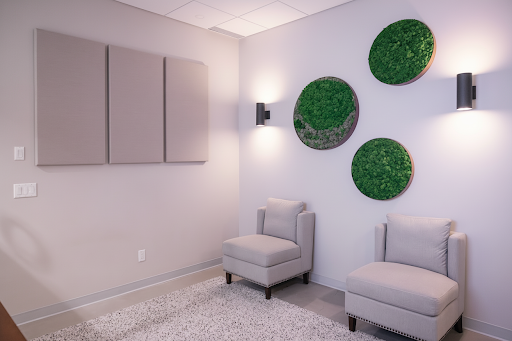
Your first session is about connection, not interrogation. Your counsellor will want to understand what brought you in, what you’re hoping for, and what your relationship with food and body has been like. There’s no pressure to share more than you’re ready to. Many clients feel nervous about being “found out” or judged, this is normal, and your counsellor understands. You’re in charge of what you disclose and when.
Our Collaborative Approach
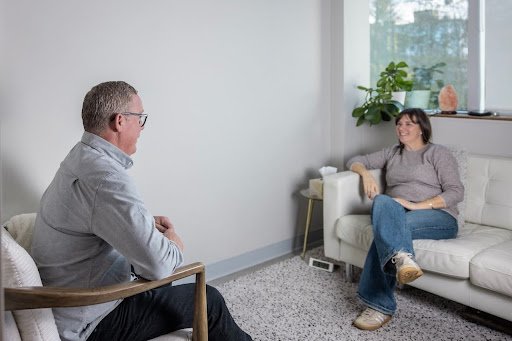
Eating disorders counselling at Lavender isn’t about a therapist telling you what to do. It’s genuinely collaborative. You and your counsellor will work together to understand what’s underneath the eating patterns, what needs they’ve been meeting, and how to develop other ways of meeting those needs. This might include processing past experiences, developing body awareness, learning to identify and tolerate emotions, or rebuilding your sense of identity beyond the eating disorder.

Confidentiality
Everything you share remains confidential within legal and ethical boundaries. Your counsellor will walk through all of this in your first session so there are no surprises. For many clients, eating disorders have been a source of deep shame and secrecy and having a space where you can finally speak honestly, without fear of judgment or someone “reporting” back to others, is essential.

Flexible, Ongoing Support
Some clients come weekly; others move to biweekly sessions as they stabilize. Some engage intensively for a period and then return for periodic check-ins over years. We don’t impose a structure on you, we adapt to what actually serves your healing.
Frequently Asked Questions
Disordered eating refers to a range of irregular eating behaviors that don’t meet the clinical criteria for a specific eating disorder but still cause distress or harm. Eating disorders, like anorexia, bulimia, or binge eating disorder, are clinical diagnoses with specific criteria. That said, our approach doesn’t change much based on whether you have a formal diagnosis. If your relationship with food is causing you suffering, you deserve support.
While nutritional rehabilitation is sometimes necessary and we support clients working with dietitians when appropriate, our focus is different. We address what’s driving the eating disorder, the emotional, relational, and often traumatic roots, rather than primarily focusing on food behaviors. We find that when the underlying issues are addressed, the relationship with food often shifts more naturally and sustainably.
Honestly, it varies enormously. Some clients work with us for six months; others for several years. Eating disorders typically develop over time and often connect to deeper patterns, they don’t resolve quickly. We’d rather be honest about that than promise a quick fix that doesn’t materialize.
Yes. We offer secure virtual counselling throughout British Columbia. Many clients find virtual sessions work well, especially if coming in person feels overwhelming initially. We can discuss which format might suit you best.
We’ll help you find someone who is. The therapeutic relationship matters too much to force something that isn’t working. If after meeting with a counsellor you don’t feel it’s the right match, let us know and we’ll connect you with another member of our team, no awkwardness, no hard feelings.
If your relationship with food is taking up significant mental space, causing you distress, or limiting your life in ways that matter to you, that’s enough. You don’t need to reach a crisis point or meet some arbitrary threshold of “sick enough.” We work with people across the spectrum of eating concerns.
No. You don’t need a formal diagnosis to begin counselling. If a diagnosis would be helpful for your understanding or for insurance purposes, we can discuss assessment options, but it’s not a prerequisite for working with us.
Not all therapy approaches are equally effective for eating disorders, and the therapeutic relationship matters as much as the approach. If previous therapy didn’t help, it might have been the wrong fit, wrong approach, wrong therapist, or wrong timing. We’re happy to talk about what didn’t work before and whether our approach might be different.