
First Responder & Military Family Counselling in Langley & Vancouver
Living with someone who serves can be isolating in ways that are hard to explain. The worry, the disrupted routines, the emotional distance, it takes a toll that often goes unacknowledged.
We offer counselling specifically for the partners, spouses, children, and family members of first responders and military personnel. Your experience matters too.
Serving Langley and the Lower Mainland since 2012
First Responder & Military Family Members
You know the sound of the phone at an odd hour. The way your stomach drops. Or maybe it’s the silence that’s harder, weeks of short answers, someone who came home but doesn’t seem fully present anymore.
Being the partner, child, or family member of a first responder or military member means living with uncertainty as a constant backdrop. You watch someone you love carry things they can’t or won’t share. You hold down the household during long shifts or deployments. You become skilled at reading moods, managing around schedules, explaining absences to children, and putting your own needs aside because their job seems so much more pressing than whatever you’re dealing with.
And yet. Your life has been shaped by their career just as profoundly as theirs has. The chronic vigilance, the unpredictable schedules, the secondary exposure to trauma, these aren’t nothing. They change you. They deserve attention.
At Lavender Counselling, we work with family members in a relational, person-centered way. We’re not here to “fix” you or give you strategies to better support your first responder (though that can be part of it). We’re here because you deserve a space that’s fully about you, your stress, your identity, your grief over what this life has cost, your hopes for what might still be possible.

Our offices are located in Langley and Vancouver, and we also offer secure virtual counselling throughout British Columbia. Whether you’re navigating deployments, shift work, PTSD symptoms in a loved one, or just the accumulated weight of years in this lifestyle, we can help.
Challenges We Help With
Living With Uncertainty and Fear
- Constant low-grade worry about your loved one’s safety that never fully goes away
- Difficulty relaxing or being present because part of you is always listening for the phone
- Fear of “the call” or “the knock,” the notification that something has happened
- Anxiety that spikes during high-profile incidents or dangerous calls
- Feeling guilty for resenting the job even though you understand its importance
Emotional Disconnection and Relationship Strain
- Your partner is physically present but emotionally distant or unavailable
- Conversations feel surface-level, they won’t or can’t share what’s actually happening
- Walking on eggshells around mood shifts or irritability
- Feeling more like a roommate or household manager than a partner
- Sexual intimacy has declined or feels disconnected
- Wondering if you still know the person you married
Carrying the Household Alone
- Functioning as a single parent during shifts, overtime, or deployments
- Making most decisions alone because your partner isn’t available to discuss them
- Exhaustion from being “on” all the time with no backup
- Resentment that builds when your needs consistently come last
- Financial stress from overtime dependency or unpredictable income
Secondary Trauma and Emotional Absorption
- Hearing details about calls or combat that now live in your head too
- Noticing your own mood shifting based on what your loved one is carrying
- Sleep disruption, nightmares, or hypervigilance that mirrors theirs
- Feeling like you’re carrying their stress on top of your own
- Difficulty separating your emotional state from theirs
Impact on Children and Parenting
- Kids showing behavioral changes during deployments or high-stress periods
- Explaining a parent’s absence or emotional withdrawal to children
- Feeling caught between protecting your children and maintaining your partner’s role
- Disagreements about parenting approaches
- Children absorbing household tension
Identity and Isolation
- Your whole life revolving around someone else’s career and schedule
- Friendships that have drifted because your life is hard to explain
- Feeling disconnected from people who don’t understand this lifestyle
- Not knowing who you are outside of being a “first responder spouse” or “military family member”
- Grieving the life or relationship you thought you’d have
Navigating Transitions
- Adjusting when they come home from deployment—reintegration is harder than anyone warns you
- Your partner is considering leaving the service, and you’re both anxious about what’s next
- Retirement is approaching and you’re not sure who either of you will be
- They’ve experienced an injury or critical incident, and everything has shifted
- Moving for their career (again) and starting over
How We Support First Responder & Military Family Members
We approach every person and every story as unique. There’s no script for what you should feel or how quickly you should process any of this. What we offer is a space where your experience is taken seriously, not as a footnote to your loved one’s service, but as something significant in its own right.
Get to Know the Problem
First, we listen. We want to understand what your daily life actually looks like. What do you carry? What do you avoid? What brought you here now?
"I didn't realize how much I'd been holding until someone asked me directly about my experience—not just how he was doing."
Understand the Patterns
We explore how this lifestyle has shaped you, your coping mechanisms, your relationships, your sense of self. Some of these adaptations have been necessary. Some may not be serving you anymore. Together, we look at what’s working and what isn’t, without judgment.
"She helped me see that my constant vigilance wasn't paranoia—it made sense given what I'd been living with. But we also talked about whether I wanted to keep living that way."
Work With the Whole Picture
For family members of first responders and military personnel, the emotional toll often shows up in the body as much as the mind. Chronic stress leaves physical traces, disrupted sleep, tension, exhaustion that rest doesn’t fix. When it’s relevant, we incorporate body-aware approaches that help you notice where you’re holding stress and find ways to release it. This isn’t about pathologizing your response. It’s about recognizing that years of living in this kind of environment affect you physically, and that support can address that too.
"I thought I just had to push through the fatigue. Learning to actually notice what my body was telling me changed how I approached everything."
Our Approach Helps You:
✓ Process the accumulated stress of years in this lifestyle
✓ Develop your own identity and sense of purpose separate from your loved one’s career
✓ Navigate difficult conversations with your partner or family member
✓ Support children through the unique challenges of this family life
✓ Work through secondary trauma or vicarious stress symptoms
✓ Build connections with others who understand—or find ways to explain your life to those who don’t
✓ Make decisions about your own future, whether that’s within this lifestyle or considering changes
Our First Responder & Military Family Counselling Team
Our team includes registered clinical counsellors who work with partners, spouses, and family members of first responders and military personnel. Each brings unique training and expertise in evidence-based approaches including:
- Trauma-informed and attachment-based therapies
- Experiential and emotion-focused approaches
- Somatic (body-centered) practices
- Person-centered and relational modalities
- Grief and loss support
Our counsellors work with:
- Spouses and partners of police officers, firefighters, paramedics, military members, correctional officers, dispatchers, and other first responders
- Children of first responders and military personnel, including those processing childhood experiences
- Parents, siblings, and other family members affected by their loved one’s service
- Families navigating deployment, reintegration, injury, retirement, or career transition
- Those dealing with a loved one’s PTSD, substance use, or mental health challenges
- Family members seeking support after a line-of-duty death or critical incident
Find Your First Responder Family Counsellor
The right therapeutic relationship makes a real difference in this work. Use our therapist selector tool to find counsellors whose expertise, approach, and availability match what you’re looking for.
Why Choose Lavender Counselling For First Responder & Military Family Support?
Relational, Person-Centered Approach
Body-Aware, Trauma-Informed Care
Find Your Perfect Fit
Consistent, Quality Care
No Artificial Timelines
Flexible Access
Insurance Coverage
Deep Community Roots
What To Expect In First Responder & Military Family Counselling
Your First Session
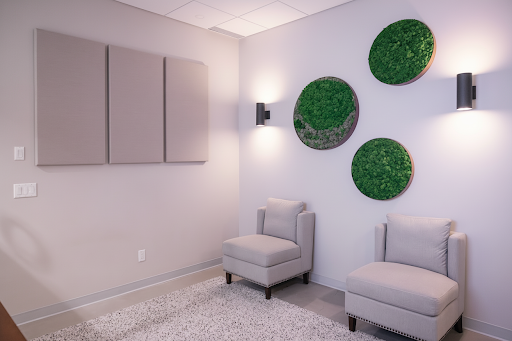
Your first session is about getting to know each other. Your counsellor will ask about what brought you in, your family situation, and what you’re hoping to get from counselling. You don’t have to have clear goals or know what you need. Many people come in with just a sense that something has to change.
You won’t be asked to share your loved one’s career details or trauma history. This space is about your experience. If their story becomes relevant, we’ll discuss it in terms of how it’s affecting you.
We’ll talk about what you’re looking for and how you’d like to work together. Some people want practical strategies for managing daily stress. Others want space to grieve or process. Many want both at different times. We’ll figure it out together.
If there’s anything specific you want us to know beforehand (or things you’d rather not discuss), you can let us know. We’ll move at whatever pace makes sense for you.
Our Collaborative Approach
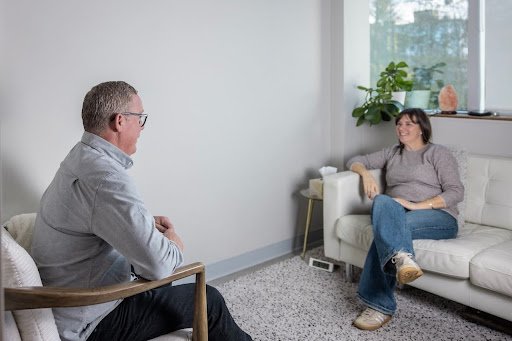
After the first session, ongoing work looks different for everyone. Some sessions might focus on something immediate, a difficult conversation with your partner, a decision you’re wrestling with, a particularly hard week. Others might go deeper into patterns you’ve noticed or history you haven’t fully processed.
We don’t follow a curriculum. We follow what’s alive for you. Your counsellor will bring expertise and perspective, but you’re the expert on your own life. This is a collaboration.

Confidentiality
Everything you share remains confidential within legal and ethical boundaries. Your counsellor will walk through all of this in your first session so there are no surprises. This is your space.

Flexible, Ongoing Support
Some people come weekly. Others come every two weeks or monthly. Some come intensively for a period and then check in occasionally. We don’t dictate a schedule. We find what works for your life, your needs, and your budget.
You can also adjust as things change. Life with a first responder or military member isn’t static, and your support doesn’t have to be either.
Frequently Asked Questions
That can be part of it if you want, but it’s not the main focus. Our first responder family counselling is about you: your stress, your needs, your identity, your well-being. You’ve probably spent years prioritizing someone else’s mental health. This is a space where yours comes first.
It depends on what you need. Sometimes individual work helps you get clear on what you want before engaging in couples work. Sometimes couples counselling is the right starting point. Sometimes both happen simultaneously. We can help you think through what makes sense for your situation.
Living with someone who has PTSD, or who’s experienced significant trauma, affects you. Whether that rises to the level of “secondary trauma” depends on a lot of factors. Either way, you deserve support for how this has impacted you. You don’t need a diagnosis to benefit from counselling.
There’s no standard answer. Some people find significant relief in a few months. Others engage in longer-term work, especially if they’re processing years of accumulated stress or making major life changes. We don’t set artificial timelines, we work at the pace that makes sense for you.
Yes. We offer secure virtual counselling throughout British Columbia. For many first responder families, virtual sessions are easier to fit around unpredictable schedules. In-person sessions are available at our Langley and Vancouver offices if you prefer that.
Our team includes counsellors who work with first responder and military families. They understand the unique dynamics, the shift work, the culture, the unspoken rules, the specific ways stress shows up in these families. During your free consultation, you can ask about their experience with this population and decide if they feel like a good fit.
If you’re wondering whether you need support, that’s often a sign that something could be improved. You don’t need to be in crisis to benefit from counselling. Many people come in feeling like they should be handling things better. That’s actually one of the most common reasons people seek help.
That’s a personal question with a personal answer. Some people notice they’re sleeping better, or feeling less anxious, or having more productive conversations at home. Some notice they’re making decisions more confidently, or feeling less resentful, or reconnecting with parts of themselves they’d set aside. We’ll check in regularly about whether the work feels useful.
Yes. Transition periods, including retirement, often bring up issues that were easier to suppress during active service. And for family members, the transition can be disorienting in its own way. Whether your loved one recently retired or has been out for years, we can help.