
Self-Esteem & Self-Worth Counselling in Langley & Vancouver
When the voice inside your head is the harshest one in the room, it’s hard to trust yourself, let alone believe you deserve to take up space. At Lavender Counselling, we don’t try to paste positive thinking over deep wounds. We help you understand where that voice came from, and what it’s been trying to protect you from.
Serving Langley and the Lower Mainland since 2012
Self-esteem & Self-worth
You know the feeling. You walk into a room and immediately start measuring yourself against everyone there. You replay conversations for hours, sure you said something wrong. You say yes to things you don’t want to do because the idea of someone being disappointed in you feels unbearable. And underneath all of it, there’s this quiet, persistent belief that you’re just… not enough.
Maybe you’ve tried the self-help books. The affirmations. The journaling. And some of it helped, for a while. The truth is, low self-esteem isn’t a thinking problem you can logic your way out of. It’s something your whole system learned, often very early on, and it runs deep.
At Lavender Counselling, we approach self-esteem work differently. We don’t see low self-worth as a flaw in you. We see it as a learned response, often rooted in early relationships, experiences of being overlooked or criticized, or environments where your needs weren’t prioritized. That’s not a deficiency. It’s an adaptation. And understanding it that way changes everything about how we work with it.

We offer self-esteem counselling at our Langley and Vancouver offices, as well as through secure virtual sessions throughout British Columbia. Whether you’re a teenager navigating the minefield of peer comparison, an adult who’s carried this weight for decades, or somewhere in between — we have counsellors who understand this work intimately.
Challenges We Help With
The Inner Critic and Self-Talk
- A constant internal voice that tells you you’re not good enough, smart enough, or worthy of love
- Replaying conversations or events and fixating on what you did wrong
- Deflecting compliments because they don’t match how you see yourself
- Comparing yourself to others and always coming up short
- A deep sense of being fundamentally flawed or broken
Relationships and Connection
- People-pleasing to avoid conflict or rejection, even when it costs you
- Difficulty setting boundaries or saying no
- Staying in relationships or situations that aren’t good for you because you don’t believe you deserve better
- Feeling like a burden when you ask for help or express your needs
- Withdrawing from people because you’re convinced they’ll eventually see the “real” you
Work, School, and Daily Life
- Avoiding opportunities, promotions, or new challenges because you’re sure you’ll fail
- Procrastinating not out of laziness, but out of fear that what you produce won’t be good enough
- Overworking or over-preparing to compensate for feeling inadequate
- Difficulty making decisions because you don’t trust your own judgment
- Imposter syndrome, the persistent belief that you’ve fooled everyone and will be found out
Emotional Patterns
- Chronic anxiety or low mood that seems to have no obvious cause
- Shame spirals that get triggered by small, everyday mistakes
- Numbness or disconnection from your own wants and needs
- Difficulty identifying what you actually feel versus what you think you should feel
- A general sense of emptiness or “going through the motions”
Physical and Somatic Signs
- Tension in your body, especially your shoulders, jaw, or stomach, that you’ve carried so long it feels normal
- Difficulty making eye contact or taking up physical space
- Trouble sleeping because your mind won’t stop reviewing the day
- Low energy and motivation that people around you might mistake for laziness
- Changes in appetite or using food, substances, or other behaviours to manage how you feel about yourself
How We Support Self-esteem & Self-worth
We approach every person and every story as unique. There’s no one-size-fits-all treatment plan for self-esteem, because the roots of low self-worth are as individual as the people carrying them. Here’s what working with us looks like.
Get to Know the Problem
Your counsellor starts by listening, really listening to how low self-esteem shows up in your specific life. Not just the thoughts, but the patterns. The relationships. The moments where you shrink. We’re curious about the whole picture, not just the symptoms.
“I finally felt like someone was hearing the stuff underneath the stuff.”
Assess the Root Cause
Low self-esteem doesn’t come from nowhere. Together, we explore the experiences and relationships that taught you to see yourself this way. Maybe it was a critical parent, bullying, being the “responsible one” who never got to have needs, or years of messages telling you that who you are isn’t acceptable. Understanding where it started is a crucial part of loosening its grip.
“I didn’t realize how much of what I believed about myself came from how I was treated as a kid.”
Treat From the Root
Self-esteem isn’t only a mental experience, it lives in the body too. Research in affective neuroscience shows that shame and worthlessness activate some of the same physiological responses as physical threat, including nervous system shutdown, constriction, and withdrawal. That’s why we may work with body-based and somatic approaches alongside talk therapy, to help your system learn a different response to the old messages it’s been carrying.
“I didn’t expect bodywork to change how I see myself, but it did. It was like something loosened that talking alone couldn’t reach.”
Our Approach Helps You:
✓ Recognize and quiet the inner critic without fighting it
✓ Understand where your self-worth patterns come from and why they made sense
✓ Build a relationship with yourself that isn’t defined by what you do for others
✓ Set boundaries without guilt — or at least with less guilt
✓ Start trusting your own judgment, needs, and voice
✓ Move through the world with more presence and less apology
✓ Cultivate a relationship with yourself that is rooted in recognizing your value, trusting your abilities, and knowing that you are enough
Our Counselling Team
Our team includes registered clinical counsellors who work with self-esteem and self-worth. Each brings unique training and expertise in evidence-based modalities including:
- Attachment-based and relational therapy
- Experiential approaches (AEDP, Focusing, EFT)
- Trauma-informed, person-centred therapy
- Somatic and body-centred practices
- Mindfulness and self-compassion frameworks
- Emotion-focused therapy
Our therapists work with:
- Children (ages 5–12, Langley offices only), tweens, teens, and adults
- Self-esteem challenges connected to trauma, identity, relationships, life transitions, or neurodiversity
- Individuals, couples, and families navigating the impact of low self-worth
- Culturally diverse backgrounds — including counselling available in Spanish and ASL
Find Your Self-Esteem Counsellor
The right therapeutic relationship is essential for self-esteem work, especially when trust and feeling safe are already hard. Use our therapist selector tool to find counsellors whose expertise, approach, and availability match what you’re looking for.
Why Choose Lavender Counselling For Self-esteem?
Relational, Person-Centered Approach
Bottom-Up, Body-Based Healing
Find Your Perfect Fit
Consistent, Quality Care
No Artificial Timelines
Flexible Access
Insurance Coverage
Deep Community Roots
What To Expect In Self-esteem Counselling
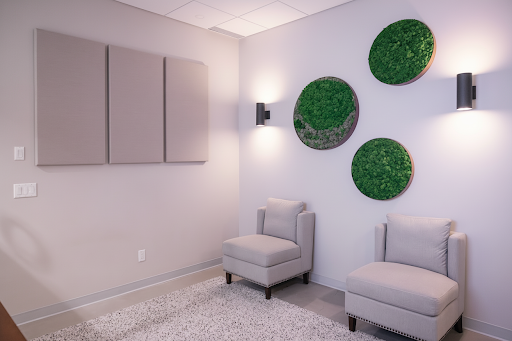
Your First Session
Your first session is about connection, not assessment. Your counsellor will want to understand your world, what brought you in, what self-esteem challenges look like in your daily life, and what you’re hoping for. There’s no pressure to share everything right away. Some people come in with a clear picture of the problem; others just know something doesn’t feel right. Both are perfectly fine starting points.
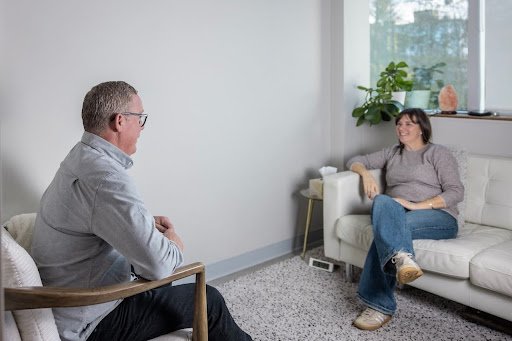
Our Collaborative Approach
This isn’t the kind of therapy where someone tells you what’s wrong and gives you a list of things to practice. Your counsellor works with you, following your lead, noticing patterns together, and gently exploring the places that feel tender. You set the pace. If something doesn’t feel right, you say so. That’s actually part of the work, learning to trust what you need.

Confidentiality
Everything you share remains confidential within legal and ethical boundaries. Your counsellor will walk through all of this in your first session so there are no surprises. For self-esteem work in particular, knowing that your most vulnerable thoughts won’t leave the room matters. We take that seriously.

Flexible, Ongoing Support
Some clients come weekly. Some come biweekly. Some come intensively for a period and then space things out. We work with you to find a rhythm that supports real change without overwhelming your life. And if you need to pause and come back later, the door stays open.
Frequently Asked Questions
They overlap, and they often coexist, but they’re not the same thing. Low self-esteem is a persistent pattern of seeing yourself as inadequate, unworthy, or not enough. Depression involves changes in mood, energy, sleep, and motivation that affect your whole functioning. Many people with low self-esteem also experience depression, and addressing the self-worth piece can be a significant part of recovery. Your counsellor can help you understand what’s going on and whether additional support might be helpful.
Affirmations work on the surface. If the deeper part of you doesn’t believe the words, repeating them can actually make you feel worse, like you’re failing at the one thing that’s supposed to help. Our approach goes underneath the thoughts to explore where they came from, how your body holds them, and what needs to shift at a relational and nervous system level for real change to take root.
It depends, and we know that’s a frustrating answer. Self-esteem patterns often develop over many years, and they don’t shift overnight. Some people notice meaningful changes in a few months. For others, especially when self-worth issues are connected to complex trauma or early attachment experiences, the work unfolds over a longer period. We don’t set artificial timelines. You’ll know when you’re ready to wrap up, and we’ll talk about it openly.
Yes. We offer secure virtual sessions throughout British Columbia. Many clients find that working from home actually helps them feel more relaxed and open, particularly when the content is vulnerable. That said, some people prefer in-person connection. Both are effective, it comes down to what feels right for you.
Tell us. Seriously. Feeling safe with your counsellor is non-negotiable for this kind of work. If the match doesn’t feel right, we’ll help you find someone else on our team. No awkwardness, no guilt. Getting the right fit is more important than being polite about a bad one.
If it’s affecting your life, your relationships, your work, your sense of peace, your ability to go after what you want, it’s enough. You don’t need a crisis to deserve support. A lot of people with low self-esteem struggle with this exact question, which is kind of the point. The voice that says “it’s not that bad” or “other people have it worse” is the same voice we’d be working on in session.
Yes. But probably not the way you think. It’s less about forcing yourself to feel confident and more about understanding the patterns, grieving what led to them, and slowly building a different relationship with yourself. People change in this work all the time. Not into someone else, into more of who they actually are.
That depends on the counsellor and on you. Some clients find practices between sessions helpful, journaling, mindfulness, self-compassion exercises. Others don’t. This isn’t a program with required steps. If something feels useful, we’ll incorporate it. If it doesn’t, we won’t force it.