Spirituality Counselling in Langley & Vancouver
You don’t have to figure out what you believe alone. Whether you’re questioning the faith you grew up with, grieving a spiritual community you’ve lost, or trying to make sense of experiences that don’t fit neatly into any framework, we’re here to sit with you in that uncertainty.
Serving Langley and the Lower Mainland since 2012
Spirituality
Maybe it started slowly. A creeping sense that the beliefs you’d held your whole life weren’t sitting right anymore. Or maybe it hit all at once, a crisis, a loss, something that shattered your sense of how the world works. Either way, you’re left with this hollow, disorienting feeling. Like the ground you were standing on just… isn’t there anymore.
And it’s not the kind of thing you can easily talk about. Friends and family might not get it, especially if they’re still part of the faith community you’re pulling away from. You might feel guilty for questioning. Or angry that you didn’t question sooner. Some people feel both at the same time.
And it’s not only people leaving faith who find themselves here. Sometimes you’re moving toward something new, exploring a spiritual practice for the first time, entering a faith community as an adult, or integrating beliefs that feel foreign to the people around you. That comes with its own kind of disorientation. Different questions, but the same need for a space where you can sort through them honestly.
At Lavender Counselling, we don’t approach spirituality as something to fix or figure out on a timeline. Your spiritual life, whatever that looks like, is deeply personal, and it touches everything: your relationships, your identity, your sense of purpose, your understanding of suffering and meaning. We meet you where you are to help you explore what’s true for you without judgment.

We offer spirituality counselling at our Langley and Vancouver offices, as well as virtually throughout British Columbia. Whether you’re working through religious trauma, navigating a faith transition, or exploring questions about meaning and identity for the first time, our team can support you.
Challenges We Help With
Faith Transitions & Doubt
- Questioning or leaving the religion you were raised in
- Feeling lost after deconstructing long-held beliefs
- Grief over losing your faith community or sense of belonging
- Navigating relationships with family members who don’t understand your spiritual shift
- Struggling to build a new sense of identity outside of religious frameworks
- Exploring or embracing a new spiritual path or belief system
Religious & Spiritual Trauma
- Lasting harm from shame-based religious teachings
- Spiritual abuse from leaders, communities, or institutions
- Fear, guilt, or anxiety rooted in religious upbringing (fear of hell, divine punishment, etc.)
- Difficulty trusting authority figures or communities after spiritual harm
- Purity culture and its ongoing impact on your body, sexuality, and relationships
Identity & Meaning-Making
- Feeling untethered or purposeless without a spiritual framework
- Conflict between your sexual orientation, gender identity, or lifestyle and religious teachings
- Struggling to reconcile personal values with inherited beliefs
- Searching for meaning after loss, illness, or major life upheaval
- Making sense and building connection with your new beliefs
Existential & Moral Distress
- Wrestling with questions about suffering, death, or the nature of existence
- Moral injury, feeling you’ve violated your own deeply held values
- Difficulty coping with the uncertainty of not having clear answers
- Anger at God, the universe, or the systems you were raised in
Relationships & Community
- Isolation from leaving a faith community
- Isolation from entering a new faith community
- Conflict with a partner or family over differing spiritual beliefs
- Learning to set boundaries with religious family members
- Rebuilding trust and social connection outside of religious contexts
- Navigating parenting when you and your partner have different spiritual values
How We Support Spirituality
We approach every person and every story as unique. Spirituality is one of the most personal aspects of human experience, no two people carry it the same way. That means your counselling won’t look like anyone else’s, because your questions, wounds, and hopes are your own.
Get to Know the Problem
Your counsellor will start by simply listening. What’s bringing you in? What does your spiritual life look like right now, and what did it used to look like? This isn’t an interrogation. It’s a conversation where you can finally say the things you might not have been able to say anywhere else.
“I didn’t realize how much I’d been holding in until someone actually asked what I believed — not what I was supposed to believe.”
Assess the Root Cause
Spiritual distress rarely exists in isolation. It’s often tangled up with attachment wounds, family dynamics, cultural identity, trauma, grief, or questions about self-worth that go back years. Your counsellor will help you start to see the connections, not to reduce your experience to something clinical, but to understand why it’s hitting so hard.
“It wasn’t just about church. It was about everything I’d built my sense of self around.”
Treat From the Bottom Up
For many people, spiritual experiences live in the body as much as the mind. Religious trauma in particular can leave a lasting imprint, the anxiety that shows up as tightness in your chest during certain conversations, the shame that lives in your gut, the hypervigilance you developed in environments where you felt spiritually unsafe. Research on religious trauma syndrome has documented how authoritarian religious environments can produce symptoms that mirror PTSD, including physiological stress responses and nervous system dysregulation. That’s why our counsellors integrate body-based and somatic approaches where appropriate, not as a replacement for exploring your beliefs and questions, but as a way to address the parts of your experience that talking alone can’t always reach.
“I could rationalize my way out of the guilt, but my body hadn’t gotten the message yet. Working with both made a real difference.”
Our Approach Helps You:
✓ Process religious or spiritual trauma at your own pace
✓ Develop a sense of identity and values that feel authentically yours
✓ Rebuild trust — in yourself, in others, and in your own judgment
✓ Navigate relationships affected by differing spiritual beliefs
✓ Find meaning and purpose on your own terms
Our Counselling Team
Our team includes registered clinical counsellors who work with spirituality-related concerns. Each brings unique training and expertise in evidence-based modalities including:
- Trauma-informed, attachment-based therapy
- Person-centred and humanistic approaches
- Somatic and body-centred practices
- Experiential therapies (including AEDP and Focusing)
- Emotion-focused therapy
- Mindfulness and self-compassion practices
Our therapists work with:
- Teens, adults, and couples navigating spiritual concerns
- People experiencing religious trauma or faith deconstruction
- Individuals exploring the intersection of identity (including 2SLGBTQ+ identity) and spirituality
- Those seeking meaning and purpose after major life changes or loss
- Clients from diverse cultural and religious backgrounds
Find Your Spirituality Counsellor
The right therapeutic relationship is essential for this kind of deeply personal work. Use our therapist selector tool to find counsellors whose expertise, approach, and availability match what you’re looking for.
Why Choose Lavender Counselling For Spirituality?
Relational, Person-Centered Approach
Body-Based Healing
Find Your Perfect Fit
Consistent, Quality Care
No Artificial Timelines
Flexible Access
Insurance Coverage
Deep Community Roots
What To Expect In Spirituality Counselling
Your First Session
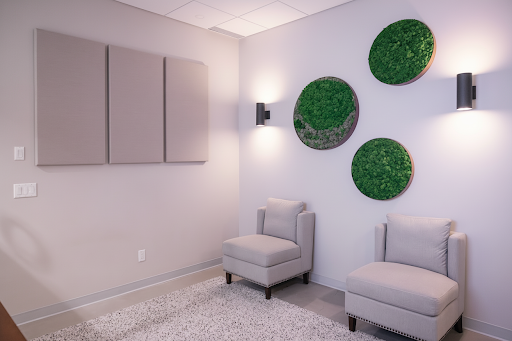
Your first session is about you being heard, fully, without judgment. Your counsellor will want to understand what’s bringing you in, what your spiritual background looks like, and what you’re hoping to get from counselling. There’s no right or wrong answer to any of it. You don’t need to have your thoughts organized or know exactly what you believe. That’s what this space is for.
Our Collaborative Approach
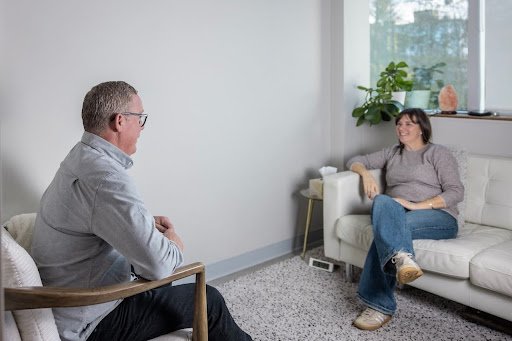
This isn’t a process where your counsellor tells you what to think or believe. It’s collaborative. Together, you’ll explore what’s coming up for you, the questions, the grief, the anger, the confusion, and start to make sense of it. Your counsellor may draw on different approaches depending on what resonates with you, from talk-based exploration to body-centred work. The direction is always guided by what matters to you.

Confidentiality
Everything you share remains confidential within legal and ethical boundaries. Your counsellor will walk through all of this in your first session so there are no surprises. This is particularly important for spiritual concerns, many people haven’t been able to voice their doubts, questions, or pain openly because of the communities or relationships involved. Your counsellor provides a space where you can be completely honest without worrying about repercussions.

Flexible, Ongoing Support
Some people come weekly. Others come every two weeks, or check in as needed. Spiritual work can be ongoing, or it can be focused on a specific transition or crisis. We’ll work with you to figure out a rhythm that makes sense for where you are right now, and that rhythm can change as your needs do.
Frequently Asked Questions
Most people question their beliefs at some point, that’s a normal part of being human. But if your spiritual questions or experiences are causing significant distress, affecting your relationships, disrupting your sleep, or leaving you feeling stuck, isolated, or anxious, that’s worth bringing to someone who can help you work through it. You don’t need to be in crisis to benefit from support.
Absolutely. You don’t need to identify with any particular religion or spiritual tradition. This work is for anyone grappling with questions about meaning, purpose, identity, morality, or their relationship to something larger than themselves. It’s also for people healing from religious experiences, even if they no longer consider themselves religious at all.
No. Our counsellors don’t have a spiritual agenda. They won’t push you toward or away from any belief system. Their role is to help you explore your own experience, understand what’s driving your distress, and support you in finding a path that feels authentic to you.
Pastoral counselling and spiritual direction typically operate within a specific faith framework. Our counsellors are registered clinical professionals who use evidence-based therapeutic approaches. While they’re equipped to discuss spiritual content with sensitivity and depth, they’re not guiding you from within a particular tradition, they’re helping you work through the psychological, emotional, and relational dimensions of your spiritual experience.
It depends entirely on what you’re working through. Someone processing a specific faith transition might work with a counsellor for a few months. Someone healing from deep religious trauma may want longer-term support. There’s no set number of sessions, we follow your pace and your needs.
Yes. We offer secure virtual counselling throughout British Columbia, in addition to in-person sessions at our Langley and Vancouver offices. Many clients find that online sessions work well for this kind of reflective, conversation-based work.
That’s completely okay, and it’s something we plan for. The therapeutic relationship matters more than almost anything else in this work. If it’s not clicking, let us know and we’ll help you connect with another counsellor on our team. There’s no pressure, no awkwardness, and no hard feelings.
If they’re on your mind enough that you’re reading this page, they’re worth exploring. You don’t need to hit some threshold of suffering before you deserve support. Many of our clients come in not even sure what they’re feeling, they just know something isn’t sitting right. That’s more than enough.
Yes, and it’s one of the most common reasons people seek this kind of support. Religious trauma, whether from authoritarian religious environments, spiritual abuse, shame-based teachings, or being rejected by a faith community because of who you are, can have lasting effects on your mental health, relationships, and sense of self. Our counsellors are trained in trauma-informed approaches and can help you process these experiences safely.
This is something our counsellors work with regularly. Differences in spiritual beliefs can create real tension in relationships, especially during transitions. Whether you’re navigating this individually or as a couple, we can help you communicate across those differences and find a way forward that respects everyone involved.