
Tween & Teen Counselling in Langley & Vancouver
Your young person is struggling, and you can feel it, even when they can’t put it into words. At Lavender Counselling, we don’t try to “fix” teenagers. We help them understand what they’re going through, build real connection, and find their footing during some of the most confusing years of their lives.
Serving Langley and the Lower Mainland since 2012
Tween & Teen Counselling
Something has shifted. Maybe your child used to talk to you, and now they don’t. Maybe the meltdowns have gotten bigger, or the silence has gotten heavier. You might be watching them pull away from friends, lose interest in things they used to love, or disappear behind a screen for hours. It’s hard to know what’s normal growing-up stuff and what’s something more.
You’ve probably tried talking to them. Tried giving them space. Tried not giving them space. You’ve maybe read articles, asked their teachers, wondered if it’s just a phase. And maybe some of it is. But information and space and patience only go so far when something deeper is driving the behaviour.
What your tween or teen is going through isn’t a problem to solve. It’s communication. Their behaviour, their withdrawal, their big emotions, all of it is telling you something about what’s happening inside. Our counsellors work relationally, which means we’re not showing up with a checklist or a program. We’re showing up as a real person, meeting your young person where they actually are, and helping them make sense of what they’re feeling. We’re showing up as a real person, meeting your young person where they actually are, and helping them make sense of what they’re feeling.

We see tweens and teens at both our Langley and Vancouver offices, and we also offer virtual counselling across British Columbia. So whether you’re in Surrey, Maple Ridge, Abbotsford, or anywhere in the Lower Mainland, there’s a way to access support that works for your family.
Challenges We Help With
Emotional and Mental Health
- Anxiety that shows up as stomach aches, avoidance, or constant worry about things that used to feel manageable
- Depression or low mood, withdrawing from activities, sleeping too much, or struggling to get through the day
- Emotional outbursts that feel disproportionate, or a flatness that’s hard to reach through
- Panic attacks or overwhelming fear that comes out of nowhere
- Self-harm or thoughts of self-harm
Identity and Self-Worth
- Struggling with who they are, questioning identity, values, sexuality, or gender
- Feeling like they don’t fit in, or that something is fundamentally wrong with them
- Perfectionism or a harsh inner critic that won’t let up
- Body image struggles and difficult relationships with food or appearance
- Navigating cultural or family expectations that feel at odds with who they’re becoming
School and Daily Life
- Declining grades, loss of motivation, or school refusal
- Difficulty concentrating, staying organized, or following through, which may or may not be related to ADHD or learning differences
- Social conflicts, bullying, or feeling isolated at school
- Struggles with transitions, new schools, moving, family changes
- Screen time and technology becoming a way to escape rather than connect
Relationships and Family
- Pulling away from parents or caregivers, or constant conflict at home
- Friendship difficulties, being left out, drama, or not knowing how to connect
- Family changes like separation, divorce, blended families, or a parent’s mental health challenges
- Difficulty trusting adults or authority figures
- Navigating peer pressure, boundary-setting, and the need for independence
Trauma and Difficult Experiences
- Processing abuse, neglect, or witnessing violence
- Grief and loss, of people, pets, relationships, or a sense of safety
- Adjusting after a significant life disruption or crisis
- Living with the effects of early childhood adversity or attachment disruption
- Responses to trauma that look like “behaviour problems” but are really survival strategies
How We Support Tweens And Teens
We approach every person and every story as unique, and that’s especially true for young people. A 10-year-old and a 17-year-old are in completely different worlds, even if the referral concern sounds similar on paper. Our counsellors take the time to really get to know your child, not just their symptoms.
Get to Know the Problem
Before anything else, we listen. Not to diagnose or label, but to understand what’s actually going on in your young person’s life, at school, at home, in their friendships, and in their own head. Sometimes the thing that brought them to counselling isn’t the thing that needs the most attention.
“They came in for anxiety. But once we started talking, it turned out the anxiety was about something much deeper — something they didn’t have the words for yet.”
Assess the Root Cause
Tween and teen behaviour always makes sense when you understand the context. We look beneath the surface, at relationships, at family dynamics, at what’s happened in their history, to figure out why things are showing up the way they are. This isn’t about blame. It’s about understanding, so the work we do together actually sticks.
“We’re not interested in managing behaviour. We want to understand what’s driving it.”
Treat From the Bottom Up
Adolescence involves significant neurological development. The prefrontal cortex, responsible for planning, impulse control, and emotional regulation, doesn’t fully mature until the mid-twenties. Meanwhile, the limbic system (the brain’s emotional centre) is highly active during these years. Research published in Developmental Cognitive Neuroscience has shown that this developmental mismatch contributes to heightened emotional reactivity and difficulty with self-regulation in adolescents. That’s why body-based and experiential approaches can be so effective with this age group, they work with the nervous system directly, rather than relying solely on talking and reasoning, which may not be fully online yet.
“Sometimes the most important work happens when we stop trying to talk our way through it and start paying attention to what the body is already saying.”
Our Approach Helps You:
✓ Build emotional awareness and regulation skills that fit their developmental stage
✓ Develop a stronger sense of identity and self-worth
✓ Improve communication with parents, caregivers, and peers
✓ Process difficult experiences and begin to heal from them
✓ Find healthier ways to cope with stress, pressure, and uncertainty
Our Tween & Teen Counselling Team
Our team includes registered clinical counsellors who work with tweens and teens. Each brings unique training and expertise in evidence-based modalities including:
- Trauma-informed and attachment-based therapy
- Experiential approaches, including Accelerated Experiential Dynamic Psychotherapy (AEDP) and Focusing
- Person-centred and relational therapy
- Somatic and body-centred practices
- Emotion-focused therapy
- Mindfulness and self-compassion practices
Our therapists work with:
- Tweens (ages 10–12), teens (ages 13–17), and older adolescents transitioning into young adulthood
- A wide range of concerns including anxiety, depression, trauma, identity, family conflict, school challenges, and more
- Young people navigating 2SLGBTQ+ identity, cultural transitions, neurodiversity, and other intersecting experiences
- Families and parents who want to better understand and support their young person
Find Your Tween & Teen Counsellor
The right therapeutic relationship is essential, and it matters with young people, who often need time to build trust with a new adult. Use our therapist selector tool to find counsellors whose expertise, approach, and availability match what you’re looking for.
Why Choose Lavender Counselling for Tween & Teen Support?
Relational, Person-Centered Approach
Bottom-Up, Body-Based Healing
Find Your Perfect Fit
Consistent, Quality Care
No Artificial Timelines
Flexible Access
Insurance Coverage
Deep Community Roots
What To Expect In Tween & Teen Counselling

Your First Session
The first session is really about connection. Your counsellor wants to understand your young person, not just what’s going wrong, but who they are. For tweens and younger teens, a parent or caregiver is often involved at the start to provide context and history. For older teens, they may prefer to meet on their own. We’re flexible on this, what matters is that your young person feels safe.
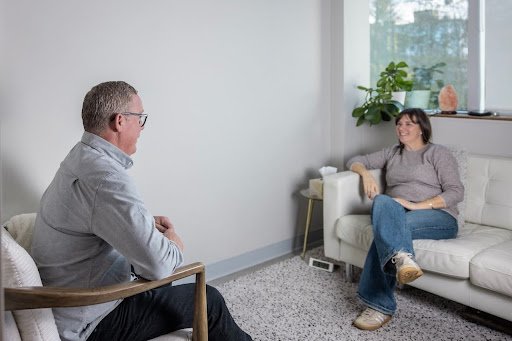
Our Collaborative Approach
Ongoing sessions look different for every young person. Some teens want to talk. Some don’t, and that’s okay. Our counsellors are trained to work with silence, resistance, and everything in between. We use creative, somatic, and experiential methods alongside conversation. And we check in with parents or caregivers as appropriate, while always respecting the therapeutic relationship we’ve built with the young person.

Confidentiality
This is a big one for teens. Everything you share remains confidential within legal and ethical boundaries. Your counsellor will walk through all of this in your first session so there are no surprises. For parents, we understand the urge to know everything. We work with you to find a balance between staying informed and respecting your teen’s privacy, because that trust is what makes the work possible.

Flexible, Ongoing Support
Some young people come weekly. Some come every other week. Some take breaks and come back when life gets hard again. We don’t lock families into rigid schedules, we work with what makes sense for your teen and your family’s life right now.
Frequently Asked Questions
That’s one of the hardest questions parents face. The truth is, a lot of challenging teen behaviour is developmentally normal. But when it’s affecting their ability to function, at school, at home, in friendships, or when your gut tells you something is off, it’s worth exploring. A free consultation with us can help you figure out whether counselling makes sense right now.
This is more common than you’d think. We can start by working with you as the parent, helping you shift dynamics at home, understand what your teen might be communicating, and create conditions where they might become more open to trying. Some teens warm up to the idea once they realize it’s not what they expected.
A lot of teen counselling focuses on changing thoughts or behaviour through structured programs. We take a different path. Our counsellors work relationally, building trust, getting curious about what’s underneath the behaviour, and using body-based and experiential methods alongside conversation. We’re not trying to teach your teen to think differently. We’re helping them understand themselves more deeply.
Not word for word, no. Confidentiality is central to the work, it’s what allows your teen to be honest. But your counsellor will communicate with you about general progress, safety concerns, and how you can best support your young person at home. We work hard to maintain that balance.
Yes. Virtual sessions are available across British Columbia. Some teens actually prefer virtual counselling, it can feel lower-pressure than sitting in an office with a stranger. We’ve found it works well for many young people, particularly older teens.
It varies widely. Some young people make meaningful progress in 8–12 sessions. Others benefit from longer-term support, especially if there’s trauma or complex family dynamics involved. We don’t set arbitrary endpoints, we follow your teen’s process.
Not at all. Our counsellors work with tweens using age-appropriate methods, more experiential and creative, less “sit and talk.” At this age, play-based and somatic approaches can be especially effective because they don’t require kids to articulate what they’re feeling in adult terms.
Then we find a better fit. This is exactly why we offer a free consultation, and why we have a team rather than a single therapist. The relationship between your teen and their counsellor is the most important factor in whether counselling works. We take that seriously.
With your consent, absolutely. Sometimes it helps to coordinate with teachers, school counsellors, physicians, or other supports. We approach this collaboratively and always with your family’s best interest in mind.
Most extended health benefit plans cover sessions with a Registered Clinical Counsellor (RCC) or Canadian Certified Counsellor (CCC). Check with your provider to confirm your coverage and any session limits.