
Veterans & Military Counselling in Langley
You served others. Now it’s time someone shows up for you. Military life asks things of people that most will never understand, and the transition out of service can feel just as disorienting as anything you faced while in it. At Lavender Counselling, we offer a space where your experiences are met with respect, not just clinical curiosity.
Serving Langley and the Lower Mainland since 2012
Veterans & Military Counselling
You were trained to push through. To adapt, overcome, perform. And for a while, that worked. Maybe it still works, in certain parts of your life.
But something’s shifted. Maybe it happened gradually. Maybe there was a moment. The sleep stopped being restful a long time ago. You find yourself scanning rooms you know are safe. The irritability that used to stay contained is leaking into your relationships. Or maybe it’s the opposite. You feel numb to things you used to care about, and you’re not sure when that started.
You might have tried talking to people about it. Family, friends, maybe even another counsellor. But there’s a gap that’s hard to bridge when someone hasn’t lived in that world. The culture, the expectations, the things you saw or did, it all sits in a context that doesn’t translate easily into civilian conversation. And the standard approaches to mental health can feel like they miss the point entirely.
At Lavender Counselling, we don’t treat military experience as a problem to diagnose. We see it as a complex set of experiences that deserve to be understood on their own terms, not filtered through a diagnostic lens. Our counsellors work relationally, which means we start with who you are now and what you’re carrying, not with a checklist of symptoms. We take the time to build that with you, because without it, nothing else we do matters much.

Our veterans and military counselling is available in person at our Langley offices and virtually throughout British Columbia. Whether you’re in the Fraser Valley, elsewhere in the Lower Mainland, or anywhere in BC, we can work with you.
Challenges We Help With
The Weight You Carry Home
- Intrusive memories or flashbacks that pull you back to things you’d rather leave behind
- Hypervigilance, constantly scanning for threats even when you know you’re safe
- Nightmares or sleep disruption that leaves you exhausted and on edge
- A sense that part of you is still “over there” or stuck in a time that’s passed
- Emotional numbness or feeling disconnected from people and experiences you used to enjoy
Moral Injury and Identity
- Guilt, shame, or anger about things you witnessed, did, or failed to do
- Struggling with the gap between who you were in service and who you are now
- Questioning your values or sense of purpose after leaving the military
- Feeling like the person you became during service doesn’t fit in civilian life
- Loss of identity, rank, structure, or the sense of belonging that came with service
Relationships and Connection
- Difficulty being emotionally present with your partner, kids, or family
- Irritability, anger, or emotional withdrawal that pushes people away
- Feeling misunderstood by people who haven’t shared your experiences
- Trouble trusting others or letting your guard down
- Intimacy challenges, emotional, physical, or both
Daily Life and Functioning
- Difficulty concentrating, making decisions, or staying motivated
- Turning to alcohol, substances, or other numbing behaviours to cope
- Feeling restless or unable to settle into the slower pace of civilian routines
- Avoiding situations, places, or people that trigger difficult memories
- Physical tension, chronic pain, or stress-related health issues that won’t resolve
The Transition Itself
- Struggling with the loss of structure, camaraderie, and mission
- Feeling adrift or purposeless outside the military context
- Difficulty navigating civilian work culture and expectations
- Financial stress or uncertainty about the future
- Grief for the life, the relationships, or the version of yourself you left behind
How We Support Veterans & Military Members
We approach every person and every story as unique. There’s no standard-issue treatment plan here. Your experiences in service were yours, shaped by your role, your relationships, what you witnessed, and what you carried. Our work together starts from that reality.
Get to Know the Problem
Before anything else, we need to understand what you’re actually dealing with, not what a textbook says you should be dealing with. This means taking time to hear your story, your way, without rushing toward a diagnosis or a fix. Some of what you’re experiencing might be clearly connected to service. Some of it might be tangled up with things that came before. We sort through it together.
“We don’t start with what’s wrong with you. We start with what happened to you — and what makes sense given what you’ve been through.”
Assess the Root Cause
Military-related distress rarely has a single cause. It’s often a layering of experiences, operational stress, moral injury, attachment disruptions, loss, identity shifts, that compound over time. We look beneath the surface symptoms to understand what’s actually driving your distress. That might mean exploring things you haven’t connected to your current struggles, or it might mean sitting with experiences you’ve been avoiding for years.
“The things that kept you alive in service might be the same things making civilian life feel impossible. That’s not a flaw — it’s an adaptation that needs updating.”
Treat From the Bottom Up
Military trauma doesn’t just live in your thoughts, it lives in your body. Research consistently supports this. The hypervigilance, the startle responses, the tension you can’t shake, the way your system goes from zero to ten without warning, these are nervous system responses, not character weaknesses. Studies on combat-related PTSD, including the work of researchers like Bessel van der Kolk, have demonstrated that trauma fundamentally alters how the body processes threat and safety. Polyvagal theory research by Stephen Porges has further shown how the autonomic nervous system can become stuck in defensive states long after the actual threat has passed.
That’s why we may incorporate body-based, somatic approaches alongside relational therapy. We’re not asking you to just talk about what happened, we’re helping your nervous system learn that the war is over.
“Your body learned to survive under conditions most people can’t imagine. Now we help it learn that it’s allowed to stand down.”
Our Approach Helps You:
✓ Process traumatic experiences without being overwhelmed or re-traumatized
✓ Rebuild a sense of identity and purpose beyond your military role
✓ Develop emotional regulation that doesn’t require shutting everything down
✓ Reconnect with the people and parts of life that matter to you
✓ Address moral injury with honesty, complexity, and self-compassion
✓ Build a relationship with your body that isn’t based on pushing through pain
Our Counselling Team
Our team includes registered clinical counsellors who work with veterans, active service members, and those transitioning out of military life. Each brings their own training and experience to this work, using evidence-based modalities including:
- Trauma-informed, attachment-based therapy
- Somatic and body-centred approaches
- Person-centred and humanistic therapy
- Emotion-focused and experiential modalities (including AEDP)
- Mindfulness and self-compassion practices
Our therapists work with:
- Active service members, veterans, and those in transition
- Adults of all ages navigating military-related challenges
- Those dealing with PTSD, moral injury, and operational stress
- Individuals managing co-occurring concerns like substance use, grief, or relationship difficulties
Find Your Veterans Counsellor
The right therapeutic relationship matters. Trust doesn’t come easily when you’ve been trained to be self-reliant, and we respect that. Use our therapist selector tool to find a counsellor whose expertise, approach, and availability match what you’re looking for.
Why Choose Lavender Counselling for Veterans & Military Support?
Relational, Person-Centered Approach
Bottom-Up, Body-Based Healing
Find Your Perfect Fit
Consistent, Quality Care
No Artificial Timelines
Flexible Access
Insurance Coverage
Deep Community Roots
What to Expect in Veterans & Military Counselling
Your First Session
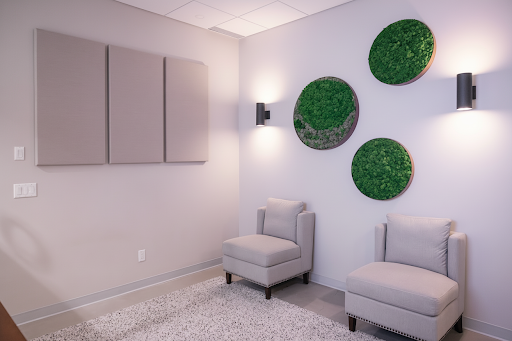
Your first session is about getting oriented, for both of us. Your counsellor will want to understand what brought you in, what you’re hoping to get out of this, and what feels most pressing right now. You don’t need to share your full story in the first meeting. There’s no pressure to go anywhere you’re not ready to go. We’ll also talk about how you’d like to work together and what makes a therapeutic space feel safe enough to actually be useful.
Our Collaborative Approach
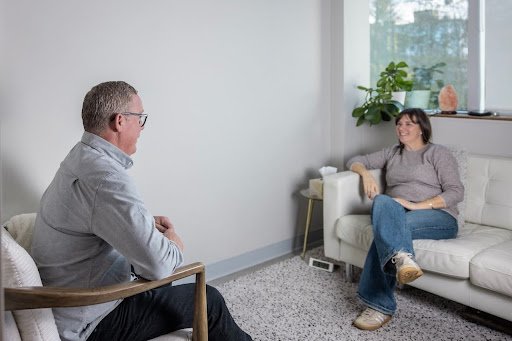
This isn’t something that gets done to you. We work alongside you, collaboratively, paying attention to what’s coming up emotionally, physically, and relationally as we go. Sessions might involve conversation, but they might also involve body-based work, experiential exercises, or simply sitting with something that’s been avoided for a long time. We adjust based on what you need, not what a protocol demands.

Confidentiality
Everything you share remains confidential within legal and ethical boundaries. Your counsellor will walk through all of this in your first session so there are no surprises. We understand that privacy concerns can be particularly acute for military members, whether you’re worried about career implications, security clearances, or just the culture around asking for help. Your records are protected under BC privacy legislation, and we take that seriously. Nothing is shared without your explicit written consent.

Flexible, Ongoing Support
Some people come weekly. Some come biweekly. Some come intensively for a period and then space things out. There’s no single right cadence. We work with you to figure out what makes sense given where you’re at, and we adjust as things shift. This is your process.
Frequently Asked Questions
No. You don’t need any diagnosis. Many veterans and service members deal with challenges, moral injury, transition stress, relationship strain, identity loss, that don’t fit neatly into a PTSD diagnosis but are absolutely worth exploring in therapy. If you’re struggling, that’s enough.
Many institutional programs rely on structured, short-term protocols designed to address specific symptoms quickly. Our approach is relational and open-ended. We focus on understanding the whole person, not just the symptoms, and we don’t impose artificial timelines on your process. We also work from the body up, which means we’re addressing the physiological impact of your experiences, not just the cognitive side.
That’s a fair question. A lot of veterans have been through therapy that felt disconnected from their actual experience, too formulaic, too focused on worksheets or cognitive reframing, or delivered by someone who didn’t really understand military culture. Our approach is different because it’s relational first. We prioritize the therapeutic relationship and use body-based methods that work with how trauma actually lives in your system, not just how you think about it.
Our counsellors who work with veterans and military members have training and experience in this area. They understand the unique dynamics of military life, the culture, the chain of command, the camaraderie, the losses, and the particular way that military service shapes identity. That said, they’ll never assume your experience matches anyone else’s. They’ll ask, listen, and learn from you.
Yes. We offer virtual counselling to anyone in British Columbia. Many veterans and service members prefer the flexibility and privacy of online sessions, and our counsellors are experienced in delivering effective therapy through secure video.
We do offer support for first responders and military family members as a separate area of focus. If your partner, children, or family are also struggling with the impact of your service, we can help connect them with the right support as well.
It depends entirely on you, your history, your goals, and what comes up along the way. Some people work with us for a few months. Some stay for longer. We don’t set a predetermined endpoint because we believe you deserve the time it takes, not the time someone else thinks it should take.
If it’s affecting your life, your relationships, or your sense of self, it’s enough. You don’t need to be in crisis to deserve support. A lot of veterans minimize what they’re going through because they’ve seen others who “had it worse.” That comparison doesn’t serve you. Your experience matters.
Our sessions with registered clinical counsellors are typically covered under most extended health benefit plans. Regarding VAC coverage, eligibility and processes vary, we’d recommend contacting VAC directly to confirm your coverage, and we’re happy to provide any documentation needed on our end.
That’s completely okay, and it’s exactly why we offer a free initial consultation. Fit matters enormously in this work. If after starting you feel it’s not clicking, let us know. We’ll help you find another counsellor on our team who might be a better match. No pressure, no hard feelings.