Women’s Health Counselling in Langley & Vancouver
Your body is going through something. Your mind is trying to keep up. You don’t have to white-knuckle your way through it alone. Women’s health isn’t just physical. It’s emotional and deeply personal. At Lavender Counselling, we help you make sense of what you’re experiencing, so you can feel like yourself again.
Serving Langley and the Lower Mainland since 2012
Women’s Health
There’s a particular kind of exhaustion that comes when your body feels like it’s working against you. Maybe it’s the fog that rolled in after having a baby and never quite lifted. Maybe it’s the rage that shows up around your cycle, the kind you can’t explain to anyone without feeling dismissed. Or maybe it’s the grief of a fertility journey that hasn’t gone the way you imagined, sitting heavy in your chest while everyone around you seems to be moving forward.
You’ve probably tried to push through. Googled your symptoms at 2am. Talked to your doctor and left the appointment feeling like something was still missing. Maybe people have told you it’s “just hormones” or that you should be grateful for what you have. And you know it’s more complicated than that, but it’s hard to articulate what you actually need.
At Lavender Counselling, we don’t see women’s health challenges as something to fix or manage with a checklist. We see them as experiences that are deeply personal and deserve real attention. Your body and your emotions aren’t separate systems. When one is struggling, the other feels it. Our work starts with understanding that connection, not talking you out of it.

We support women across Langley, Vancouver, and the Lower Mainland, with both in-person sessions at our Langley and Vancouver offices and virtual counselling available throughout British Columbia. However you’re most comfortable showing up, we’ll meet you there.
Challenges We Help With
Hormonal and Reproductive Health
- Mood changes tied to your menstrual cycle that feel bigger than “PMS”
- Perimenopause or menopause symptoms that are affecting your sense of self
- Emotional fallout from hormonal birth control changes or other medical interventions
- Navigating the mental health side of conditions like PCOS, endometriosis, or fibroids
Fertility and Family Building
- The emotional toll of infertility, IVF, or other fertility treatments
- Pregnancy loss, miscarriage, or stillbirth grief
- Anxiety during pregnancy after previous loss
- Navigating the decision of whether or not to have children, especially when it doesn’t feel like a simple choice
Pregnancy, Postpartum, and Early Parenthood
- Prenatal anxiety or depression that doesn’t match the “glowing” narrative
- Postpartum depression, anxiety, rage, or intrusive thoughts
- Difficulty bonding with your baby and the shame that comes with that
- Identity shifts after becoming a parent, feeling like you’ve lost yourself
- Birth trauma that no one seems to take seriously
Body Image and Physical Changes
- Struggling with how your body looks or feels after pregnancy, surgery, or aging
- Disordered eating patterns connected to life transitions or hormonal shifts
- Feeling disconnected from or betrayed by your body
- Navigating chronic illness or pain in the context of womanhood
Emotional and Relational Patterns
- Carrying the mental load in your household and feeling invisible
- Resentment building in your relationships but not knowing how to address it
- People-pleasing or over-functioning that’s left you depleted
- Difficulty setting boundaries around your own health and needs
- Feeling like you’re performing “fine” while falling apart underneath
Life Transitions and Identity
- Career changes, retirement, or shifts in purpose that feel disorienting
- Empty nest, divorce, or other transitions that shake your sense of who you are
- Reconciling what you were taught about being a woman with who you actually are
- Navigating aging, loss of roles, or invisibility that comes with getting older
How We Support Women’s Health
We approach every person and every story as unique. There’s no single version of what women’s health challenges look like, and there’s no one-size-fits-all way to address them. What we offer is a relationship, with a counsellor who takes the time to understand your specific experience before deciding how to move forward together.
Get to Know the Problem
Before anything else, we listen. Not just to your symptoms or your diagnosis, but to the full picture, your history, your relationships, your day-to-day reality. Women’s health concerns don’t exist in a vacuum. They’re shaped by everything from your family dynamics to the messages you absorbed growing up about what it means to be strong, capable, and “together.”
“I finally felt like someone was listening to the whole story — not just the parts that fit neatly into a diagnosis.”
Assess the Root Cause
What looks like anxiety might actually be a stress response shaped by years of self-neglect. What feels like depression might be unprocessed grief over a life transition you never got to mourn. We look beneath the surface, not to overanalyze, but to make sure we’re actually addressing what’s driving your distress rather than just managing the edges of it.
“We stopped treating the symptoms and started understanding where they came from.”
Treat From the Bottom Up
Women’s health experiences, from postpartum recovery to the hormonal shifts of menopause, are deeply connected to the body’s stress response systems. Research has increasingly shown that reproductive hormonal changes directly influence nervous system regulation, affecting everything from mood and sleep to how you process stress. This isn’t abstract theory. It’s why anxiety can spike premenstrually, why postpartum rage can feel so physical, why perimenopause can bring emotional responses that seem to come out of nowhere.
That’s why our counsellors incorporate body-based and somatic approaches alongside relational work. Rather than just talking about what you’re feeling, we help you develop awareness of what’s happening in your body, and build capacity to regulate those responses from the ground up.
“Learning to listen to my body — not just manage it — changed everything about how I move through the hard days.”
Our Approach Helps You:
✓ Understand the connection between your physical health and emotional wellbeing
✓ Develop tools for navigating hormonal and life transitions with more steadiness
✓ Process grief, trauma, or loss connected to your reproductive health
✓ Rebuild a relationship with your body that isn’t defined by frustration or disconnection
✓ Strengthen your sense of identity through periods of significant change
Our Women’s Health Counselling Team
Our team includes registered clinical counsellors who work with women’s health concerns. Each brings unique training and life experience to this area, with expertise in evidence-based modalities including:
- Trauma-informed, attachment-based therapy
- Somatic and body-centred approaches
- Emotion-focused therapy (EFT)
- Experiential and relational therapies
- Person-centred and humanistic frameworks
- Mindfulness and self-compassion practices
Our therapists work with:
- Teens, adults, and couples navigating women’s health challenges
- Prenatal, postpartum, and perinatal mental health
- Fertility and reproductive loss
- Hormonal transitions including perimenopause and menopause
- Chronic illness and pain specific to women’s health
- Body image and identity through life transitions
Find Your Women’s Health Counsellor
The right therapeutic relationship matters, especially when you’re sharing vulnerable parts of your experience. Rather than choosing from a long list, use our therapist selector tool to find counsellors whose expertise, approach, and availability match what you’re looking for.
Why Choose Lavender Counselling for Women’s Health?
Relational, Person-Centered Approach
Bottom-Up, Body-Based Support
Find Your Perfect Fit
Consistent, Quality Care
No Artificial Timelines
Flexible Access
Insurance Coverage
Deep Community Roots
What to Expect in Women’s Health Counselling
Your First Session
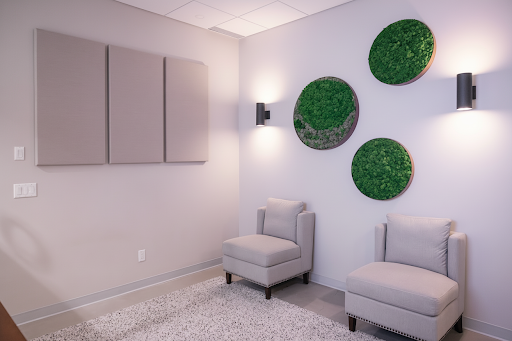
Your first appointment is about getting to know each other. Your counsellor will want to hear what brought you in, not just the headline version, but the full context. What’s been going on? How long has it been building? What have you already tried? There’s no pressure to have it all figured out before you walk in. In fact, most people don’t. That’s kind of the point.
Our Collaborative Approach
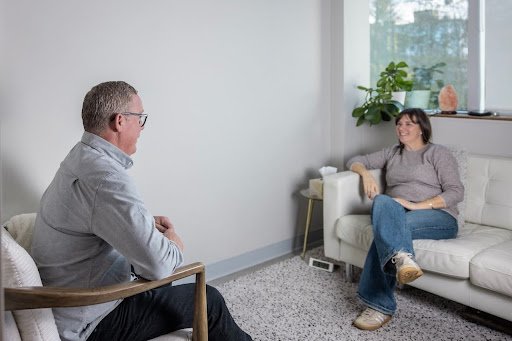
After your initial session, you and your counsellor will start shaping what ongoing work looks like. This isn’t a program you follow, it’s a collaborative process. Some sessions might focus on understanding patterns. Others might involve more body-based work or processing specific experiences. The direction shifts as you do, and your counsellor checks in regularly to make sure things are tracking for you.

Confidentiality
Everything you share remains confidential within legal and ethical boundaries. Your counsellor will walk through all of this in your first session so there are no surprises. This is especially important in women’s health work, where the topics, fertility, postpartum experiences, sexuality, body image, can feel particularly vulnerable. Your counsellor creates a space where you can be honest without worrying about judgment.

Flexible, Ongoing Support
Session frequency is up to you. Many clients start weekly, then shift to biweekly or monthly as they find their footing. Others maintain weekly sessions through particularly intense periods, a difficult pregnancy, early postpartum, or a major transition. There’s no formula. We adjust based on what you need and what’s realistic for your life.
Frequently Asked Questions
There’s no threshold you need to meet. If what you’re experiencing is affecting your quality of life, your mood, your relationships, your ability to function the way you want to, that’s enough. You don’t need a crisis or a diagnosis to deserve support.
No. Women’s health counselling covers a wide range of experiences across every stage of life, from puberty through menopause and beyond. Fertility, hormonal health, body image, identity transitions, chronic illness, sexual health, and the emotional weight of caregiving all fall within this work.
Medical care focuses on diagnosis and treatment of physical conditions, and that’s important. But it often doesn’t address the emotional, relational, and identity-level impact of what you’re going through. Counselling gives you space to process those layers. The two work well together, and we’re happy to collaborate with your medical team if that’s helpful.
Absolutely. Part of the work can involve helping you articulate your experience more clearly, both to yourself and to the people around you. Some of our counsellors also work with couples, so if relationship dynamics are part of the picture, that’s something we can address directly.
Yes. We offer secure virtual counselling for anyone in British Columbia. Many clients find this especially valuable during pregnancy, early postpartum, or when managing chronic health conditions that make travel difficult.
Tell us. It’s not a problem, therapeutic fit matters more than almost anything else in this work. We offer a free consultation specifically so you can get a sense of the connection before committing. And if things don’t feel right down the road, we’ll help you find a better match within our team.
It depends entirely on what you’re working through. Some people come for a specific season, the postpartum period, a fertility journey, a difficult transition, and find what they need in a few months. Others appreciate longer-term support as they move through multiple phases. We don’t impose timelines.
Yes. Birth trauma is something several of our counsellors have specific experience with. Whether it was a traumatic delivery, an emergency intervention, or the emotional aftermath of a birth experience that didn’t go the way you expected, this is work we take seriously.
Our counsellors aren’t medical professionals, and we’re transparent about that. But many on our team have training and experience that helps them understand the intersection of physical and mental health, particularly around reproductive health, chronic illness, and pain. When needed, we work alongside your medical providers.