
Child Counselling in Langley
When your child is struggling, whether with big feelings they can’t name, behaviors that seem out of nowhere, or silence where there used to be words, you want support that meets them exactly where they are. Our child counsellors in Langley use play, creativity, and relationship to help children make sense of their world and find their way back to themselves.
Serving Langley and the Lower Mainland since 2012
Child Counselling
Watching your child struggle is one of the hardest experiences as a parent. Maybe they’re having meltdowns that seem to come from nowhere, or they’ve gone quiet and withdrawn. Maybe school has become a battleground, friendships feel impossible, or nighttime brings tears and fears you don’t know how to soothe. You’ve tried the logical explanations, the consequence charts, the reward systems, but children don’t think their way through pain. They feel it, live it, and often can’t find the words for what’s happening inside.
You’ve probably heard that children are “resilient” or that “it’s just a phase.” But if it were that simple, you wouldn’t be here. Children communicate through behavior, through play, through the stories they tell and the games they create. When something is too big or too scary to say out loud, it shows up in how they move through the world. And that’s exactly where our work begins.
At Lavender Counselling, we don’t see children as small adults who need to “talk it out.” We meet them in their language, through play, creativity, movement, and relationship. Our child counsellors understand that healing happens not through insight alone, but through felt safety, connection, and the gradual building of capacity to hold difficult feelings. We work collaboratively with parents, recognizing that you know your child best, while bringing specialized expertise in child development, attachment, and trauma-informed care.

We serve families throughout Langley, Surrey, Maple Ridge, and the Lower Mainland. Child counselling is available in-person at our Langley offices and virtually throughout British Columbia for families who prefer online support.
Challenges We Help With
Emotional & Behavioral Struggles
- Intense emotional outbursts, meltdowns, or rage that seem disproportionate to the situation
- Shutting down, going silent, or becoming emotionally unreachable
- Aggression toward siblings, peers, or adults
- Difficulty managing frustration or disappointment
- Emotional reactivity that disrupts daily routines and family life
Anxiety, Fear & Worry
- Separation anxiety that makes drop-offs at school or daycare agonizing
- Specific fears that have grown beyond typical childhood worries
- Physical complaints (stomachaches, headaches) with no medical cause
- Refusal to try new things or participate in activities they once enjoyed
- Nighttime fears, difficulty sleeping alone, or recurring nightmares
Social & Relationship Difficulties
- Struggling to make or keep friendships
- Being bullied or becoming withdrawn from peer groups
- Difficulty reading social cues or understanding peer dynamics
- Conflict with siblings that goes beyond typical rivalry
- Challenging authority or refusing to cooperate with adults
Responses to Change & Loss
- Grief following death of a loved one, including pets
- Adjustment struggles after divorce, separation, or family restructuring
- Regression in development after major life changes (new sibling, move, school change)
- Processing traumatic events or ongoing stress
- Changes in eating, sleeping, or bathroom habits during transitions
School & Learning Challenges
- School refusal or extreme distress about attending
- Difficulty concentrating or completing work despite capability
- Performance anxiety around tests or presentations
- Behavioral issues that only appear in school settings
- Social struggles during unstructured time (recess, lunch)
Complex Presentations
- Adopted children processing attachment or identity questions
- Children who have experienced abuse, neglect, or trauma
- Neurodivergent children (ADHD, autism) navigating relationships and regulation
- Children with behavioral diagnoses (ODD, CD) and their families
- Medical trauma or adjustment to chronic illness
How We Support Child Counselling
We approach every child and every story as unique. While we draw on evidence-based practices and specialized training, we never apply a one-size-fits-all formula. Your child’s experience, your family’s context, and your values shape how we work together.
Get to Know the Problem
We start by understanding what’s happening, not just the behaviors you’re seeing, but what your child is experiencing beneath them. This means creating safety for your child to show us (through play, art, stories, or eventually words) what life feels like from inside their world. We also spend time with you, learning about your child’s history, what you’ve tried, what your concerns are, and what you’re hoping for.
"Children's behavior is always communication. Our job is to understand what they're trying to tell us."
Assess the Root Cause
Challenging behaviors in children are rarely about defiance or manipulation, they’re adaptive responses to something feeling overwhelming, unsafe, or impossible. We look beneath surface symptoms to understand what your child’s nervous system might be responding to. Is this about attachment disruption? Unprocessed trauma? Developmental challenges? Sensory overwhelm? Environmental stress? Understanding the root helps us intervene in ways that actually create change, rather than just managing symptoms.
"We're not trying to fix your child. We're trying to understand what's getting in the way of them being themselves."
Work From the Bottom Up
Children live in their bodies first, their thinking minds second. When a child’s nervous system is dysregulated, stuck in fight, flight, freeze, or shutdown, no amount of talking or reasoning will help. Research on child development and trauma shows that regulation happens through co-regulation with safe adults, through play that allows processing without words, and through building the body’s capacity to tolerate difficult feelings. This is why our child counsellors use play therapy, creative expression, and relationship-based approaches rather than sitting children down for traditional “talk therapy.”
"Play is a child's natural language. When we join them there, healing becomes possible."
Our Approach Helps Children:
✓ Build emotional regulation skills and resilience through safe, attuned relationship
✓ Process difficult experiences (trauma, loss, change) at their own pace
✓ Develop self-awareness and confidence in their ability to handle challenges
✓ Improve relationships with family, peers, and other important adults
Our Child Counselling Team
Our team includes registered clinical counsellors who work with children and families. Each brings specialized training in child development, play therapy, attachment-based approaches, and trauma-informed care. Our child counsellors use evidence-based modalities including:
- Play therapy and creative/expressive approaches
- Attachment-based and relational therapy
- Trauma-informed care specific to children
- Parent consultation and family systems work
- Neurodevelopmental understanding (ADHD, autism, learning differences)
Our therapists work with:
- Children ages 5-12 (some work with younger or older depending on presentation)
- Parents seeking consultation and support
- Families navigating complex dynamics or significant stressors
- Children with varied presentations from anxiety to behavioral challenges to trauma histories
Find Your Child Counsellor
The right therapeutic relationship is essential for child counselling work. Use our therapist selector tool to find counsellors whose expertise, approach, and availability match what you and your child need.
Why Choose Lavender Counselling For Child Counselling?
Relational, Child-Centered Approach
Play-Based, Developmentally Attuned Care
Find Your Perfect Fit
Consistent, Quality Care
No Artificial Timelines
Flexible Access
Insurance Coverage
Deep Community Roots
What to Expect in Child Counselling

Your First Session
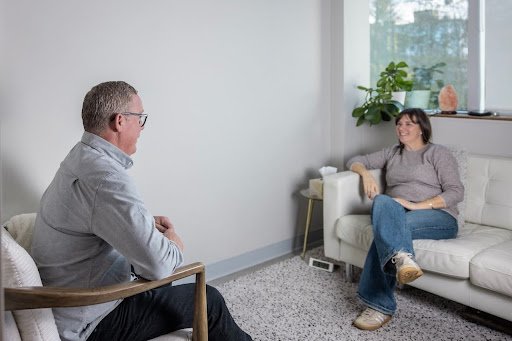
The first session typically involves meeting with parents first (either alone or with your child present, depending on age and comfort). We’ll talk about what brings you in, your child’s history, what you’ve tried, and what you’re hoping for. If your child is present, they’ll have a chance to explore the play space and start getting comfortable. The goal isn’t to solve everything in session one, it’s to build safety and begin understanding what’s happening.
Our Collaborative Approach
Child counselling is a partnership between counsellor, child, and parents. Depending on your child’s age and needs, sessions may be individual time with your child, family sessions, or parent consultation sessions. We keep you informed about themes and progress (in age-appropriate ways that respect your child’s privacy), and we check in regularly about whether the approach is helping. You’re not on the outside, you’re part of the team.

Confidentiality
Children have a right to privacy in therapy, and building trust requires that they know some things can stay between them and their counsellor. That said, we’re always transparent with parents about themes and progress, and we involve parents immediately if there are safety concerns. We talk with families early on about how we handle confidentiality at different developmental stages.

Flexible, Ongoing Support
Some families come weekly, some every other week, some less frequently as things stabilize. Session frequency shifts based on what your child needs and what works for your family. This isn’t a rigid program, it’s responsive support that adapts as your child grows and changes.
Frequently Asked Questions
Trust your instinct. If you’re worried enough to be asking this question, that’s worth paying attention to. Some challenges are developmentally typical and pass with time and support, but others signal that something deeper needs attention. Signs that counselling might help: behaviors that are escalating rather than improving, significant changes in functioning (sleep, eating, school performance, friendships), your child seems genuinely distressed or stuck, or you as a parent feel overwhelmed and unsure how to help. A free consultation can help you determine if counselling is the right next step.
Play therapy recognizes that children process experience differently than adults. Instead of sitting across from a therapist talking about feelings, children use toys, art, sand, movement, and stories to express what’s happening inside. The counsellor joins the child in play, helping them work through difficult experiences symbolically and safely. For younger children (typically under 10-12), play therapy is often more effective than talk therapy because it matches how children naturally make sense of their world.
Child counselling addresses the root causes beneath behaviors, not just symptom management. While we absolutely work with parents and may suggest strategies, the primary focus is on understanding what’s driving your child’s struggles and helping them build internal capacity to regulate, cope, and heal. It’s not about teaching you better parenting techniques (though we support parents too), it’s about helping your child develop new neural pathways and felt experiences of safety, connection, and resilience.
There’s no standard timeline. Some children make significant shifts in 8-12 sessions when working on a specific challenge (adjustment to divorce, processing a loss, managing school anxiety). Others benefit from longer-term support, especially with complex trauma, attachment difficulties, or ongoing life stressors. We check in regularly about progress and adjust the plan as needed. Your child’s healing pace, not an arbitrary session limit guides the timeline.
Yes. While some younger children or those with specific needs do better in-person with access to play materials, many children engage well in virtual counselling, especially older children or those who are more verbal. Virtual sessions can use online games, drawing apps, and creative activities. It’s worth discussing with your counsellor what format might work best for your child’s age and presentation.
That’s completely normal and not a barrier to progress. Many children come to counselling unsure, resistant, or unable to articulate what’s happening. Skilled child counsellors know how to build relationship without forcing engagement, using play and presence to create safety. Sometimes the most meaningful sessions are the ones where a child barely speaks but plays out an entire emotional experience through toys or art. Resistance is information, not failure.
Both. Effective child counselling almost always involves parent support. This might look like periodic parent-only sessions, check-ins at the beginning or end of your child’s sessions, or family sessions where everyone participates. Parents aren’t the problem, but you’re absolutely part of the solution. We help you understand what’s happening for your child and how to support them outside of sessions.
Tell us. Fit matters immensely, especially in child counselling where trust and safety are everything. If the match isn’t working, we’ll help you find a different counsellor on our team. There’s no judgment, every counsellor has a different style and energy, and not every child connects with every adult. We’d rather switch early than have you persevere in a relationship that isn’t helping.
Previous therapy experiences, especially ones that didn’t help, give us important information about what doesn’t work for your child. Maybe the approach was too cognitive for a child who needs play-based work. Maybe it was too short-term for a complex issue. Maybe the relationship wasn’t right. We learn from what hasn’t worked and try something different. Many children who “failed” other approaches thrive with a different counsellor or modality.