
Chronic Illness Counselling in Langley & Vancouver
Living with a chronic illness means navigating a reality most people don’t see: the exhaustion that doesn’t show up on tests, the grief of losing your former life, the isolation of being sick in a world built for the healthy. We understand that your illness isn’t just a medical condition, it’s a daily emotional, relational, and existential challenge that deserves real support.
Serving Langley and the Lower Mainland since 2012
Chronic Illness
You wake up already calculating: Do I have enough energy to shower? Can I make it through this meeting? Will I pay for today’s activity with three days in bed? You’ve become an expert in invisible math, constantly negotiating with a body that has its own agenda. And while the medical system focuses on managing symptoms, no one’s asking about the emotional weight of living this way, the frustration, the fear, the profound grief of watching your life shrink.
You’ve probably tried to stay positive or not let it define you. You’ve heard the advice to practice self-care, manage your stress, accept your limitations. While these strategies may feel helpful at times, living with a chronic illness is far more complex, and carrying the crushing loneliness of being sick in a world that expects you to power through can feel overwhelming and deeply isolating. The truth is, chronic illness demands more than symptom management—it requires learning to live in a fundamentally altered relationship with your body, your future, and yourself.
At Lavender Counselling, we see Chronic Illness as a relational challenge between you and your body, you and your limitations, you and a world that wasn’t built for people who are sick. Our approach honours the legitimacy of your experience while helping you find ways to live with meaning, connection, and dignity despite ongoing illness.

We serve clients throughout Langley, Vancouver, Surrey, Maple Ridge, Abbotsford, and across the Lower Mainland and British Columbia through both in-person counselling at our Langley and Vancouver offices and secure virtual sessions.
Challenges We Help With
Physical & Energy Management
- Debilitating fatigue that no amount of rest fixes
- Pain that dictates what you can and cannot do
- The physical symptoms no one else can see
- Unpredictable flare-ups that derail your plans
- The daily calculations about what you can afford to do with limited energy
- Loss of mobility, ongoing weakness or stiffness
- Increased physcial sensitivity that can make everyday activities more difficult and exhuasting
Emotional & Mental Impact
- Grief over the life you used to have or the future you expected
- Anxiety about symptoms worsening or new diagnoses
- Depression from isolation and reduced ability to participate in life
- Frustration with a body that won’t cooperate
- Fear about financial stability and long-term care needs
- Anger at being dismissed by medical professionals or loved ones
- Struggling with the loss of personal choice and a reduction in autonomy
Identity & Self-Worth
- Loss of identity tied to what you used to be able to do
- Shame about needing accommodations or asking for help
- Feeling like a burden to family and friends
- Struggling to see yourself as valuable when you can’t be “productive”
- Confusion about who you are beyond your illness
Relationship Strain
- Partners or family members who don’t understand what you’re going through
- Isolation from friends who’ve drifted away or don’t know how to relate anymore
- Guilt about cancelled plans and unmet expectations
- Intimacy challenges related to pain, fatigue, or body changes
- Loneliness of being the only person who truly knows what your days are like
Navigating Systems & Daily Life
- Exhaustion from advocating for yourself in medical settings
- Financial stress from reduced work capacity or medical costs
- Difficulty maintaining employment or career goals
- The endless administrative burden of managing care
- Loss of independence and having to ask for help with basic tasks
Existential Questions
- Wrestling with the unfairness of being sick
- Searching for meaning in suffering
- Questioning spiritual beliefs about why this is happening
- Facing mortality or shortened life expectancy
- Trying to find purpose when life looks nothing like you planned
How We Support Chronic Illness
We approach every person and every story as unique. There’s no formula for healing from chronic illness because you’re not broken, and chronic illness calls for care that listens, adapts and responds to each person’s unique experience. What we offer is a relationship where your full experience matters, where we help you understand what’s happening beneath the surface, and where we work together to find ways forward that honour both your limitations and your humanity.
Get to Know the Problem
Before we can support you, we need to understand your specific experience of chronic illness. What does your illness take from you on a daily basis? What have you lost? What are you most afraid of? How has it changed your relationships, your sense of self, your view of the future? We take time to hear the full story and not just the diagnosis, but what it actually means to live in your body, with your particular challenges, in your specific life context.
"The grief of chronic illness is real, and it deserves to be witnessed."
Assess the Root Cause
Chronic illness creates layers of impact that go far beyond the physical symptoms. We explore what’s underneath your current struggles: Is the depression about the illness itself, or about the loss of who you used to be? Is the anxiety about symptoms, or about being abandoned by people who can’t handle your limitations? Is the anger at your body, at the medical system, at a world that doesn’t accommodate sickness? Understanding these deeper layers helps us address what’s actually driving your distress.
"Understanding your distress starts with understanding what this illness has cost you."
Treat From the Bottom Up
Chronic illness fundamentally affects your nervous system’s ability to feel safe. When you’re living with constant pain, unpredictable symptoms, or debilitating fatigue, your body exists in a state of ongoing threat. Research shows that chronic illness often dysregulates the autonomic nervous system, keeping you stuck in survival mode even when you’re trying to rest. That’s why we use body-based approaches to help your nervous system find moments of safety and regulation, build tolerance for the uncertainty of symptoms, and develop a more compassionate relationship with your body despite its limitations.
"Healing doesn't mean your symptoms go away—it means finding ways to be with yourself and your experience that feel more bearable."
Our Approach Helps You:
✓ Process the profound grief of chronic illness without minimizing or rushing it
✓ Develop self-compassion for the reality of living with physical limitations
✓ Navigate relationship challenges and communicate your needs more effectively
✓ Build a life that has meaning and connection despite reduced capacity
✓ Find ways to relate to your body that aren’t rooted in shame or frustration
✓ Manage the anxiety, depression, and isolation that often accompany chronic illness
Our Chronic Illness Counselling Team
Our team includes registered clinical counsellors who work with chronic illness. Each brings unique training and expertise in evidence-based modalities including:
- Somatic and body-based therapies for nervous system regulation
- Attachment-based approaches for relational healing
- Trauma-informed care for medical trauma and dismissal
- Grief therapy for loss of health and identity
- Emotion-focused therapy for processing complex feelings
- Mindfulness and acceptance-based approaches
Our therapists work with:
- Adults living with autoimmune conditions, chronic pain, chronic fatigue, and other ongoing illnesses
- Individuals navigating new diagnoses or progressive conditions
- People experiencing medical trauma from dismissive or inadequate care
- Those struggling with the emotional impact of reduced functioning
- Clients dealing with the relational strain of being chronically ill
- Individuals facing existential questions related to illness and mortality
Find Your Chronic Illness Counsellor
The right therapeutic relationship is essential for chronic illness work. Rather than choosing from a long list, use our therapist selector tool to find counsellors whose expertise, approach, and availability match what you’re looking for.
Why Choose Lavender Counselling For Chronic Illness?
Relational, Person-Centered Approach
Bottom-Up, Body-Based Healing
Find Your Perfect Fit
Consistent, Quality Care
No Artificial Timelines
Flexible Access
Insurance Coverage
Deep Community Roots
What To Expect In Chronic Illness Counselling

Your First Session
Your first session is about understanding your experience. We’ll ask about your diagnosis, symptoms, and daily realities, but we’ll also want to hear about what chronic illness has taken from you: the losses, the changes, the parts of your life that feel different now. We’ll explore what brings you to therapy at this moment and what kind of support would actually be helpful. This isn’t an intake form to fill out, it’s the beginning of a relationship where your story matters.
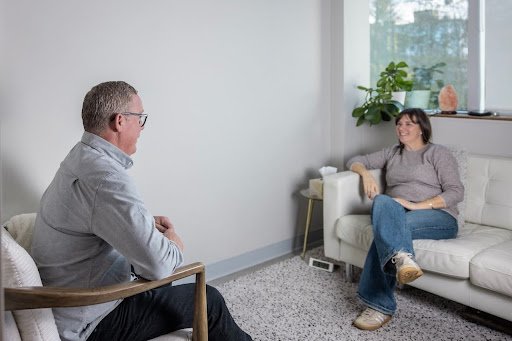
Our Collaborative Approach
Ongoing therapy is a partnership. We work together to identify what’s most pressing, whether that’s managing the emotional impact of flare-ups, navigating relationship strain, processing grief, or finding meaning in a life that looks different than you planned. Some sessions focus on immediate challenges; others go deeper into the patterns and beliefs that make chronic illness harder to bear. We follow your lead and adjust based on what you need.

Confidentiality
Everything you share remains confidential within legal and ethical boundaries. Your counsellor will walk through all of this in your first session so there are no surprises. Living with chronic illness often means your medical information feels public, therapy is a space that’s truly yours.

Flexible, Ongoing Support
Some clients come weekly when they’re struggling; others come every few weeks or monthly for maintenance support. Chronic illness has its own rhythms, and therapy can flex with that. If you need to cancel because of a flare-up or medical appointment, we understand. This is support that works around the reality of being sick, not the other way around.
Frequently Asked Questions
Support groups can be incredibly valuable for connection and shared understanding. Counselling offers something different: individualized attention to your specific emotional challenges, relational patterns, and healing needs. In therapy, you’re not performing wellness or trying to inspire others—you can be exactly as angry, sad, or exhausted as you actually feel. Both support groups and therapy have a place; they serve different needs.
Chronic illness is absolutely a physical condition—and it also has profound emotional, relational, and existential impacts. You’re not coming to therapy because there’s something wrong with your mind; you’re coming because living with ongoing physical illness is emotionally and psychologically demanding. Therapy doesn’t treat your physical symptoms; it supports you in navigating the reality of living with them.
There’s no set timeline. Some people come for a few months during a particularly difficult period—a new diagnosis, a major flare-up, relationship breakdown related to illness. Others work with their therapist for years, using therapy as ongoing support for the long-term challenge of being chronically ill. We follow your needs, not a predetermined schedule.
Absolutely. Many of our chronic illness clients prefer virtual sessions because traveling while sick can be exhausting or impossible. Online therapy through secure video gives you access to support without the physical demands of coming to an office. You can attend sessions from your bed if that’s what your body needs.
This happens, and it’s important to address. If the fit doesn’t feel right, tell us. We can help you transition to a different therapist within our practice whose style or approach might work better for you. The therapeutic relationship is the foundation of healing—it needs to feel safe and genuine.
If chronic illness is affecting your emotional wellbeing, your relationships, your sense of self, or your ability to find meaning in life—that’s enough. You don’t need to be in crisis or “struggling enough” to deserve support. The question isn’t whether your illness is bad enough; it’s whether therapy would help you navigate the challenges you’re facing.
You’re right that lived experience matters. While not all our therapists have chronic illness, they all bring deep empathy, and a commitment to truly understanding your specific experience. Part of therapy is helping your therapist understand what your particular illness means in your particular life—and good therapists know how to hold space for experiences they haven’t personally lived.
Yes. Part of chronic illness counselling often involves navigating the isolation and frustration of not being understood by the people closest to you. We can help you develop language for communicating your needs, set boundaries that protect your limited energy, process the grief of not having the support you deserve, and find ways to stay connected despite the gap in understanding.
We work with clients facing progressive conditions and life-limiting illnesses. This work often involves processing anticipatory grief, finding meaning in the time you have, navigating end-of-life planning, and supporting you and your loved ones through the reality of advancing illness. These are some of the hardest conversations a person can have—and they deserve compassionate, skilled support.