
Codependency Counselling in Langley & Vancouver
You’re exhausted from putting everyone else first, yet terrified of what happens if you stop. You’ve lost track of where you end and others begin. Our codependency counselling helps you reclaim your sense of self while building the healthy relationships you deserve.
Serving Langley and the Lower Mainland since 2012
Codependency
You wake up already thinking about someone else’s mood, their needs, what they might need from you today. You’ve become so skilled at reading the room that you’ve forgotten how to read yourself. The thought of saying “no” feels dangerous, not just uncomfortable, but genuinely threatening, like you might lose everything if you stop managing, fixing, helping, smoothing things over.
Maybe you’ve tried setting boundaries. You read the books, practiced the scripts, told yourself “this time will be different.” But when the moment comes, something inside collapses. You give in. You over-explain. You take on their emotions as your own emergency. And afterwards, you feel that familar mixture of resentment and relief, angry at yourself for yielding, yet grateful you didn’t risk the relationship.
Here’s what we understand: codependency isn’t a character flaw or weakness. It’s a deeply learned pattern that once helped you survive, maybe by keeping peace in an unstable home, earning love through usefulness, or avoiding abandonment by becoming indispensable. You learned that your safety depended on managing others’ feelings and needs. The problem isn’t that you care too much. It’s that somewhere along the way, you learned that caring for yourself was selfish, dangerous, or simply not an option.

We work with individuals throughout Langley, Vancouver, Surrey, Maple Ridge, Abbotsford, and across British Columbia through both in-person sessions at our Langley and Vancouver offices and secure virtual counselling.
Challenges We Help With
Relationship Patterns
- Feeling responsible for others’ feelings, choices, or problems
- Difficulty ending unhealthy relationships even when you know you should
- Attracting or staying with people who need “fixing” or constant support
- Losing yourself in relationships, your identity becomes wrapped up in the other person
- Fear of being alone driving you to stay in relationships that drain you
Boundaries and Self-Advocacy
- Saying “yes” when everything in you wants to say “no” or vice versa
- Feeling guilty or selfish when you prioritize your own needs
- Difficulty identifying what you actually want or need
- Over-explaining or justifying basic requests or decisions
- Tolerating treatment you’d never accept for someone you love
Emotional Patterns
- Chronic anxiety about others’ reactions or approval
- Feeling responsible when others are upset, even when it’s not your fault
- Swinging between resentment and guilt in your relationships
- Difficulty sitting with others’ discomfort without rushing to fix it
- Feeling empty or lost when you’re not taking care of someone
Physical and Mental Impact
- Exhaustion from constantly monitoring and managing others
- Difficulty relaxing or being present because you’re always “on alert”
- Stress-related symptoms (headaches, digestive issues, sleep problems)
- Feeling like you’re performing or wearing a mask in relationships
- Losing track of your own thoughts, feelings, and preferences
Self-Worth and Identity
- Deriving your value from being helpful, needed, or indispensable
- Feeling like you don’t know who you are outside of your relationships
- Difficulty accepting help or support from others
- Believing others’ needs are more valid or important than yours
- Feeling like you have to earn love through what you do, not who you are
How We Support Codependency
We approach every person and every story as unique. Codependency doesn’t look the same for everyone, what it means to lose yourself in relationships, where those patterns came from, and what healing looks like is deeply personal.
Get to Know the Problem
We start by understanding your specific experience with codependency. How do these patterns show up in your relationships? When do you notice yourself disappearing? What does it feel like in your body when you’re about to set a boundary but don’t? We’re curious about the relationships that shaped these patterns, not to assign blame, but to understand how you learned that your needs were secondary, dangerous, or simply didn’t matter.
"For the first time, someone wasn't telling me to 'just set boundaries'—they helped me understand why that felt impossible."
Assess the Root Cause
Codependency usually develops in response to early relationships where your needs weren’t consistently met, where love felt conditional, or where you had to manage others’ emotions to stay safe. Maybe you grew up in a home with addiction, mental illness, or chaos. Maybe you learned that being “good” or helpful was the only way to get attention. Maybe expressing your own needs led to rejection or punishment. We help you trace these patterns back to their origins—not to stay stuck in the past, but to understand why you still respond as if your survival depends on others’ approval.
"I finally understood—I wasn't broken. I was just doing what I learned I needed to do to be loved."
Treat From the Bottom Up
When you’ve spent years or decades abandoning yourself in relationships, changing these patterns requires more than just understanding them intellectually. Your body holds these responses, the anxiety that spikes when someone’s upset with you, the automatic “yes” that comes out before you’ve even thought about what you want. We work with both mind and body to help you recognize these patterns as they’re happening, build capacity to pause before automatically accommodating, and develop a felt sense that you can be safe while taking up space.
"I learned to notice the tightness in my chest before I automatically said yes—and that pause gave me a choice."
Our Approach Helps You:
✓ Recognize codependent patterns as they’re happening, not just in hindsight
✓ Develop authentic boundaries that feel sustainable, not like a betrayal
✓ Rediscover who you are beneath the roles you’ve been playing
✓ Build relationships where you can be yourself, not just useful
✓ Trust your own feelings, needs, and perceptions as valid and important
Our Counselling Team
Our team includes registered clinical counsellors who work with codependency. Each brings unique training and expertise in evidence-based modalities including:
- Attachment-based therapy for understanding relational patterns
- Emotionally Focused Therapy (EFT) for couples and individuals
- Somatic and body-centered approaches for nervous system regulation
- Internal Family Systems (IFS) for working with protective parts
- Trauma-informed practices addressing developmental wounds
- Relational therapy emphasizing the therapeutic relationship as healing
Our therapists work with:
- Adults navigating codependent relationship patterns
- Individuals from families affected by addiction or mental illness
- People recovering from relationships with narcissistic or emotionally unavailable partners
- Those experiencing codependency in romantic relationships, friendships, or family dynamics
- Individuals working to reclaim their identity and self-worth
Find Your Counsellor
The right therapeutic relationship is essential for codependency work. You need someone you can trust as you practice being authentic, setting boundaries, and prioritizing yourself, often for the first time. Use our therapist selector tool to find counsellors whose expertise, approach, and availability match what you’re looking for.
Why Choose Lavender Counselling for Codependency?
Relational, Person-Centered Approach
Bottom-Up, Body-Based Healing
Find Your Perfect Fit
Consistent, Quality Care
No Artificial Timelines
Flexible Access
Insurance Coverage
Deep Community Roots
What To Expect In Codependency Counselling

Your First Session
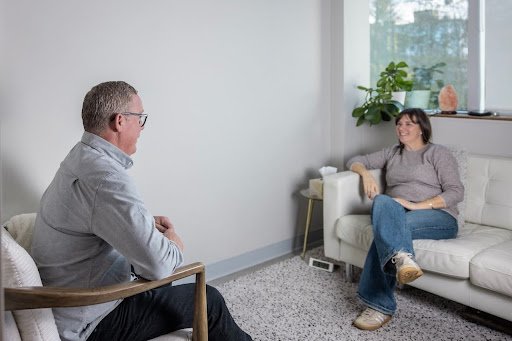
Your first appointment is about understanding your unique experience with codependency. We’ll explore what brings you in now, what your relationships have looked like, and what patterns you’re noticing. We’re curious about how codependency shows up in your life, not just in romantic relationships, but with friends, family, at work, with your kids. We’ll also talk about what you’re hoping will be different and what healing might look like for you. This isn’t an interrogation, it’s a conversation where you get to be honest about the exhaustion of living this way.
Our Collaborative Approach
Ongoing therapy for codependency is about slowly, carefully learning to bring yourself into the room, first with your therapist, then in the rest of your life. We’ll notice patterns as they show up, help you understand where they came from, and practice something different together. You might work on recognizing the physical sensations that happen before you abandon yourself. You’ll experiment with small boundary-setting in safe contexts. We’ll explore what you actually want, think, and feel beneath the layers of what you think you should want. This work is gradual, relational, and deeply personal.

Confidentiality
Everything you share remains confidential within legal and ethical boundaries. Your counsellor will walk through all of this in your first session so there are no surprises. For codependency work, this confidentiality is especially important, you need to know you can be honest about your relationships, your resentments, your fears of abandonment, without it getting back to the people in your life.

Flexible, Ongoing Support
There’s no one-size-fits-all approach to healing codependency. Some clients come weekly to build momentum and consistency. Others come every other week or monthly as they practice new patterns. You might work intensively for a period, take a break, and return when you’re facing new challenges. We trust you to know what rhythm serves your healing.
Frequently Asked Questions
Caring for others is healthy, it’s part of being human and connected. Codependency is when caring comes at the consistent expense of yourself, when you feel responsible for others’ feelings and choices, when your sense of worth depends on being needed, or when you can’t tolerate others’ discomfort without rushing to fix it. The key difference: healthy caring includes space for your own needs, feelings, and boundaries. Codependency requires you to abandon those things.
If boundary-setting were just about knowing the right words to say, you would’ve figured it out by now. The difficulty isn’t lack of knowledge, it’s that you learned boundaries were dangerous. Maybe expressing needs led to rejection. Maybe saying “no” caused conflict you couldn’t handle. Maybe you only felt loved when you were useful. Your body remembers this, even when your mind knows boundaries are healthy. Therapy helps you learn a different truth: that you can set boundaries and still be safe, loved, and connected.
Codependency can absolutely change, though the timeline and process are different for everyone. You won’t flip a switch and suddenly have perfect boundaries, this is developmental work, learning things you maybe should have learned decades ago. You’ll have setbacks and moments when old patterns resurface under stress. But yes, people do heal from codependency. They rebuild their sense of self, create healthier relationships, learn to recognize and honor their needs. It takes time, support, and practice, but it’s entirely possible.
Self-help resources can be valuable for understanding codependency intellectually, but they often can’t address the deeper attachment wounds and relational patterns that maintain these behaviors. Our approach is relational, you support codependency in relationship, with someone who sees you, respects your boundaries, and doesn’t need you to take care of them. We work with both your understanding of these patterns and your lived experience of them, helping you develop new patterns where codependency actually lives, in your relationships and your automatic responses.
There’s no standard timeline. Some people feel significant shifts within months, they’re setting boundaries they couldn’t before, feeling less responsible for others’ emotions, recognizing patterns earlier. For others, especially when codependency is deeply rooted in early trauma or long-term relationship patterns, the work takes longer. We don’t rush this process. Healing happens in layers, and we work at the pace that feels right for you.
This is a common fear, and it makes sense, if your relationships have required you to be codependent, you might worry that changing will destroy them. Here’s the truth: therapy won’t make you selfish. It will help you develop healthy selfhood, which is different. Some relationships will strengthen when you bring your authentic self to them. Some relationships will struggle or end because they only worked when you were self-abandoning. That’s painful information, but it’s also important information. You deserve relationships where you can be yourself, not just useful.