
Dissociative Disorders (DID) Counselling in Langley & Vancouver
When parts of yourself feel unreachable, when time goes missing, when you’re not sure who’s showing up from moment to moment, you’re not losing your mind. Your system learned to protect you in the only way it could. We offer trauma-informed counselling that honours how you survived, while helping you find integration and wholeness.
Serving Langley and the Lower Mainland since 2012
Dissociative Disorders (DID)
You might lose hours or days and have no idea where they went. You might find evidence of things you did but can’t remember doing, clothes you don’t remember buying, conversations you don’t remember having, places you don’t recall going. Sometimes you look in the mirror and don’t recognize the person staring back. You might hear voices inside your head that feel distinct from your own thoughts, or find yourself acting in ways that feel completely unlike you. Maybe others have told you that you seem like a “different person” at times, and you’re starting to wonder if they’re right.
Maybe you’ve tried grounding techniques, mindfulness apps, or journaling to “stay present,” but they weren’t enough. The reality is that dissociation isn’t something to simply think your way out of, it’s your nervous system’s deeply ingrained response to overwhelming trauma. Parts of you split off to contain what was too much to hold all at once. That was survival. That was adaptation. And that deserves respect.
At Lavender Counselling, we see dissociative disorders as evidence of your incredible capacity to survive. Your system found a way to protect you when you needed it most. Our work isn’t about forcing integration or making parts disappear, it’s about creating enough safety that all parts of you can begin to know each other, communicate, and eventually choose to work together. We move at your pace, honouring both the protective function of dissociation and your readiness to reconnect with yourself.

We serve clients throughout Langley, Vancouver, Surrey, Maple Ridge, Abbotsford, and across British Columbia through both in-person sessions at our Langley and Vancouver offices and secure virtual counselling. Whether you’re just beginning to understand your dissociative experiences or you’ve been in treatment for years, we’re here to support you.
Challenges We Help With
Memory and Time
- Losing time, minutes, hours, or even days you can’t account for
- Finding items you don’t remember acquiring or evidence of activities you don’t recall
- Being told about conversations or events you have no memory of
- Difficulty maintaining a continuous sense of your life story or personal history
- Gaps in childhood memories that feel unusually large or complete
Identity and Sense of Self
- Feeling like different “people” or “parts” inside you with distinct voices, ages, or preferences
- Shifting abruptly between feeling capable and feeling childlike or helpless
- Experiencing yourself as multiple distinct identities rather than one continuous person
- Uncertainty about your preferences, values, or personality traits
- Looking in the mirror and not recognizing yourself or feeling disconnected from your reflection
Body Disconnection
- Feeling detached from your body, as if watching yourself from outside
- Physical numbness or inability to feel pain, hunger, or exhaustion
- Out-of-body experiences or feeling like you’re floating
- Not recognizing your own hands, voice, or physical appearance
- Self-injury without clear memory of doing it or without feeling physical pain
Daily Life Disruption
- Difficulty maintaining jobs, relationships, or responsibilities due to inconsistent functioning
- Finding yourself in places without knowing how you got there
- Unexplained injuries or physical changes you can’t account for
- Switches in handwriting, speech patterns, or physical abilities
- Confusion about what’s real versus imagined
Emotional Overwhelm
- Rapid, intense mood swings that feel like they belong to different people
- Emotional flashbacks that feel like you’re reliving trauma in real time
- Feeling numb and disconnected one moment, then flooded with emotion the next
- Difficulty regulating emotions or returning to baseline after distress
- Internal conflicts or arguments between different parts of yourself
Relationship Strain
- Others saying you act “completely different” or “out of character” at times
- Difficulty maintaining consistent relationships when your sense of self shifts
- Not remembering important conversations or commitments with loved ones
- Fear of being “found out” or exposed as fragmented
- Struggling to trust others when you don’t fully trust your own perceptions
How We Support Dissociative Disorders (DID)
We approach every person and every story as unique. There’s no one-size-fits-all treatment for dissociative disorders, because each person’s system developed in response to their specific experiences and needs. Our work is collaborative, paced by you, and built on the foundation of safety, both in the therapeutic relationship and in your daily life.
Get to Know the Problem
We start by understanding your system, not fixing it, but getting to know it. What parts are present? What roles do they serve? When do switches happen, and what triggers them? We help you develop awareness of your dissociative experiences without judgment or pressure to change immediately.
"We're not here to eliminate parts of you. We're here to help all parts of you feel safe enough to exist together."
Assess the Root Cause
Dissociation nearly always develops in response to trauma, particularly repeated trauma in childhood when escape wasn’t possible. We explore what your system needed to survive, what overwhelmed your capacity to cope, and how dissociation became your most adaptive response. This isn’t about reliving trauma, but about understanding the protective function your dissociation served.
"Your dissociation made sense. It still makes sense. And now maybe you're at a point where it's no longer as helpful as it used to be."
Work With Your Nervous System
Dissociative disorders fundamentally involve disconnection from the body and present-moment awareness as a protective mechanism. Research shows that trauma gets stored in the nervous system, not just in memory, which is why cognitive approaches alone often aren’t enough. We use body-based approaches, including somatic awareness, grounding techniques, and work with physical sensations, to help you gradually increase your capacity to stay present in your body. This work happens slowly, at a pace your nervous system can tolerate, building safety and connection from the ground up. The goal isn’t to force integration but to help different parts of your system learn they can coexist safely.
"Integration isn't about losing parts of yourself. It's about helping all parts of you feel safe enough to be present at the same time."
Our Approach Helps You:
✓ Develop awareness and understanding of your dissociative system
✓ Build internal communication and cooperation between parts
✓ Reduce involuntary switching and increase your sense of control
✓ Process and resolve underlying trauma at a pace that feels manageable
✓ Increase your capacity to stay present and grounded in daily life
✓ Rebuild connection to your body, emotions, and sense of self
✓ Create safety and stability in your life and relationships
Our Counselling Team
Our team includes registered clinical counsellors who work with dissociative disorders and complex trauma. Each brings unique training and expertise in evidence-based modalities including:
- Trauma-focused therapy and complex trauma treatment
- Parts work and internal systems approaches
- Attachment-based and relational therapy
- Somatic and body-centered approaches (Sensorimotor Psychotherapy, Somatic Experiencing)
- AEDP (Accelerated Experiential Dynamic Psychotherapy)
- Emotion-focused therapy
- Mindfulness and grounding techniques
- Person-centered and humanistic approaches
Our therapists work with:
- Adults experiencing dissociative identity disorder (DID) or other specified dissociative disorder (OSDD)
- Individuals with depersonalization/derealization experiences
- People with dissociative amnesia or dissociative symptoms related to trauma
- Those navigating the complexities of living with a dissociative system
Find Your Dissociative Disorders Counsellor
The right therapeutic relationship is essential for dissociative disorders work. This is deep, long-term therapeutic work that requires trust, safety, and genuine connection with your therapist. Use our therapist selector tool to find counsellors whose expertise, approach, and availability match what you’re looking for.
Why Choose Lavender Counselling for Dissociative Disorders?
Relational, Person-Centered Approach
Bottom-Up, Body-Based Healing
Find Your Perfect Fit
Consistent, Quality Care
No Artificial Timelines
Flexible Access
Insurance Coverage
Deep Community Roots
What To Expect In Dissociative Disorders Counselling
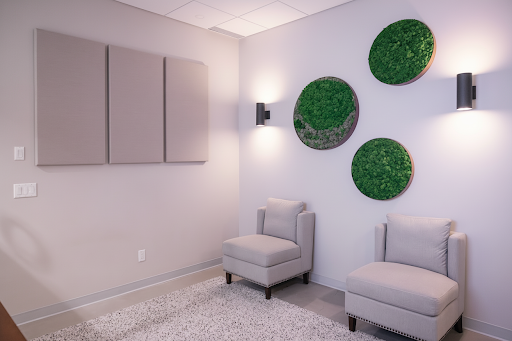
Your First Session
Your first appointment will focus on understanding your experiences, your system, and what brings you to therapy now. We’ll invite you to share a bit about yourself at whatever level feels comfortable and explore some of the things you’re looking for from counselling. You dont need to have it all figured out beforehand. This is also your chance to ask questions and assess whether this therapist feels like someone you can trust with this work.
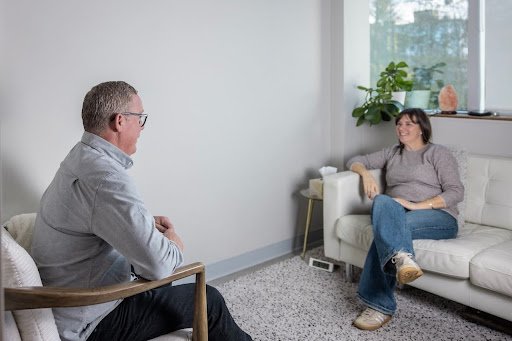
Our Collaborative Approach
Treatment for dissociative disorders is collaborative and individualized. Some people need extensive stabilization and safety-building before doing any trauma work. Others are ready to begin processing trauma more quickly. We follow your lead, working with your system’s readiness rather than against it. Sessions might include talking, parts work, somatic exercises, journaling between parts, or whatever approaches feel most helpful for where you’re at. We regularly check in about what’s working and adjust our approach based on your feedback.

Confidentiality
Everything you share remains confidential within legal and ethical boundaries. Your counsellor will walk through all of this in your first session so there are no surprises. Its important to have a safe place to explore information about your dissociative system, your parts, or your trauma history. You get to decide what you share and when.

Flexible, Ongoing Support
Some clients with dissociative disorders come weekly for stability and consistency, especially early in treatment. Others come biweekly or monthly once they’ve developed more internal resources. Frequency can shift based on what’s happening in your life or your system. There’s no one right way to do this work, we adapt to what serves you best.
Frequently Asked Questions
Dissociation exists on a spectrum. Everyone dissociates sometimes, zoning out during a boring task, highway hypnosis, getting lost in a daydream. Clinical dissociation becomes problematic when it’s chronic, involuntary, and interferes with your life. DID is at the more severe end of the spectrum, characterized by the presence of two or more distinct personality states (alters) with their own patterns of relating to the world. Other dissociative disorders include OSDD (Other Specified Dissociative Disorder), depersonalization/derealization disorder, and dissociative amnesia. Not everyone with dissociative symptoms has DID, and we work with the full range of dissociative experiences.
Many trauma therapies focus primarily on processing traumatic memories through talking or cognitive restructuring. While we may do some of that work, we emphasize building safety and stabilization first, working with your internal system of parts rather than trying to eliminate them, and incorporating body-based approaches to help you rebuild your capacity to stay present. We also don’t rush toward integration, some clients find cooperation between parts more realistic and helpful than full integration, and we support whatever serves you best.
This is genuinely long-term work. Most people with DID or OSDD work with their therapist for years, not months. Treatment typically unfolds in phases: stabilization and safety-building, then trauma processing, then integration or cooperation between parts. Some people stay in the stabilization phase for a long time before they’re ready for trauma work. Others move more quickly. There’s no predetermined timeline, this work takes as long as it takes, and we’re here for the duration.
Yes. Many of our clients with dissociative disorders prefer virtual sessions, especially at the beginning when leaving home feels overwhelming or when certain parts feel safer meeting from home. Virtual counselling can actually support this work well because you’re in a familiar, controlled environment. We offer secure video counselling throughout British Columbia.
Therapeutic fit is absolutely critical for dissociative disorders work. If you’re not feeling a good connection with your therapist, or if certain parts of your system don’t feel safe with them, please tell us. We can help you transition to a different therapist on our team without judgment. You’re not stuck with your first choice, and finding the right match is worth the effort.
If dissociative symptoms are interfering with your life, causing memory gaps, relationship problems, difficulty functioning, or distress, that’s enough reason to seek support. You don’t need a formal DID diagnosis to benefit from therapy. Many people with OSDD, depersonalization disorder, or significant dissociative symptoms find tremendous relief in working with a therapist who understands dissociation, even if they don’t meet full criteria for DID.
No, and that’s not the goal. Parts developed for a reason, they served essential protective functions. Our work isn’t about eliminating parts but about helping them feel safe enough to communicate, cooperate, and exist without such rigid barriers between them. Some people eventually experience full integration where parts blend into a more unified sense of self. Others maintain distinct parts who simply work together better. Both outcomes are valid, and we support whatever serves you.
Our registered clinical counsellors can assess for dissociative symptoms and provide clinical impressions, but formal psychiatric diagnosis of DID typically requires assessment by a psychiatrist or psychologist. If you’re seeking diagnosis, we can refer you to appropriate specialists. However, you don’t need a formal diagnosis to begin therapy, many people start working with us while still in the assessment process.
That’s completely normal. Dissociative disorders are often misunderstood and misdiagnosed, and many people question whether their experiences are “real” enough or whether they’re making it up. Doubt is actually a common feature of dissociative disorders. In therapy, we focus on your experiences and symptoms rather than getting caught up in diagnosis debates. Whether you have DID, OSDD, or another form of dissociation, we can help you understand what’s happening and develop tools to function better.