
Pregnancy & Postpartum Counselling in Langley & Vancouver
Becoming a parent changes everything including your relationship with yourself. If pregnancy or postpartum life feels harder than anyone told you it would be, you don’t have to push through it alone. We offer counselling that meets you where you are, without judgment and without rushing you toward someone else’s version of “fine.”
Serving Langley and the Lower Mainland since 2012
Pregnancy & Postpartum Counselling
Sometimes, there’s a gap between what people expect you to feel and what you actually feel. Maybe you thought pregnancy would be full of excitement, but instead you’re drowning in anxiety you can’t explain. Or the baby’s here and everyone keeps telling you how beautiful this time is, meanwhile you’re crying in the bathroom at 3 a.m., wondering what’s wrong with you. The guilt alone can be suffocating. You might feel disconnected from your baby, your partner, or yourself, and not know how to talk about it because you’re supposed to be happy.
You’ve probably tried the advice. Sleep when the baby sleeps. Get outside more. Talk to your partner. And sure, maybe some of that helps around the edges. But sometimes these strategies aren’t enough by themselves (and that’s ok!). The truth is, everything that you’re experiencing matters, no matter how big or small. Your struggle doesn’t mean that you’re failing as a parent.
At Lavender Counselling, we don’t see perinatal struggles as something to diagnose away. What you’re experiencing, the anxiety, the sadness, the disconnection, the rage you didn’t expect. These are real responses to one of the most profound transitions a person can go through. Our approach is relational and person-centred. We sit with you in what’s actually happening, help you make sense of it, and support you in finding your footing on your own terms. Not on a timeline. Not with a script.

We offer pregnancy, prenatal, and postpartum counselling at our Langley and Vancouver offices, as well as virtually throughout British Columbia. Because getting to an office with a newborn (or while pregnant and exhausted) isn’t always realistic, many of our clients choose virtual sessions, and the work is just as meaningful.
Challenges We Help With
Emotional & Mood Changes
- Persistent sadness, tearfulness, or emotional numbness that doesn’t lift
- Anxiety that feels constant, about the baby, your health, or things you can’t name
- Irritability or anger that surprises you with its intensity
- Feeling disconnected from your pregnancy or your baby after birth
- Intrusive, frightening thoughts you’re afraid to tell anyone about
Physical & Body-Based Experiences
- Exhaustion
- Sleep difficulties
- Changes in appetite, eating too little, too much, or without tasting anything
- Panic symptoms: racing heart, chest tightness, difficulty breathing
- Feeling physically on edge, like your body won’t settle
Identity & Self-Worth
- Grieving the loss of the person you were/the freedom you had before pregnancy or parenthood
- Feeling like you’re not bonding with your baby the way you “should”
- Questioning whether you’re cut out for this
- Loss of interest in things that used to matter to you
- Struggling with how your body has changed and what that means for you
- Feeling like the label of being a parent overshadows all the other things that make you who you are
Relationship & Social Impact
- Tension or distance with your partner since the baby (or since getting pregnant)
- Withdrawing from friends and family
- Resentment toward your partner, your situation, or even the baby
- Difficulty asking for help or accepting it when it’s offered
- Feeling isolated or lonely even when people are around
Pregnancy-Specific Concerns
- Anxiety or grief following pregnancy loss, fertility challenges, or a difficult birth
- Fear and hypervigilance during pregnancy after a previous loss
- Processing a birth experience that was traumatic or didn’t go as planned
- Navigating complicated feelings about an unplanned pregnancy
- Managing the emotional weight of high-risk pregnancy or bed rest
- Anxiety or fear about the labour and delivery process
- Explore worries about transitioning to parenthood
- Process past life experiences that might impact your ability to be the best parent you can be
- Navigate the stress of expectations or judgements from others and yourself
How We Support Pregnancy & Postpartum Challenges
We approach every person and every story as unique. There’s no one-size-fits-all protocol for what you’re going through, because what brought you here is yours, shaped by your history, your relationships, your body, and this particular moment in your life. Here’s what working with us actually looks like.
Get to Know the Problem
Before anything else, we want to understand what’s really happening for you. Not just the symptoms, the full picture. What did you expect this time to feel like? What does it actually feel like? What are you carrying that nobody sees?
“You came in with a story about what’s wrong. We want to hear the story underneath — the one that makes everything else make sense.”
Assess the Root Cause
Perinatal struggles don’t show up in a vacuum. They’re often tangled up with earlier experiences, your own attachment history, past losses, trauma, relationship patterns, even the messages you absorbed growing up about what a “good mother” or “good parent” looks like. We help you trace the threads so the present starts making more sense.
“Sometimes what looks like postpartum depression is actually grief. Or unprocessed trauma finding a voice. We take the time to understand which it is.”
The Body’s Role in Perinatal Mental Health
Pregnancy and postpartum aren’t just emotional experiences, they’re profoundly physical ones. Hormonal shifts, sleep deprivation, and the physiological demands of growing and feeding another human being directly affect your nervous system’s ability to regulate. Research has consistently shown that perinatal mood and anxiety disorders involve dysregulation of the hypothalamic-pituitary-adrenal (HPA) axis, the body’s central stress response system. That’s why talk alone sometimes doesn’t reach what’s happening. Our counsellors may use body-based, somatic approaches alongside relational work to help your nervous system find its way back to a sense of safety. This isn’t about ignoring your thoughts or feelings, it’s about working with your whole self.
“Your body has been through something enormous. Healing that isn’t separate from healing your mind — they’re the same work.”
Our Approach Helps You:
✓ Develop a relationship with your own experience of parenthood, not someone else’s ideal
✓ Process birth trauma, pregnancy loss, or grief in a way that feels safe and paced for you
✓ Reconnect with yourself and your baby when disconnection has taken hold
✓ Build capacity to manage anxiety, mood shifts, and overwhelm from the inside out
✓ Strengthen your relationship with your partner through this transition
✓ Understand what’s driving the struggle, not just manage the symptoms
Our Counselling Team
Our team includes registered clinical counsellors who work with pregnancy, prenatal, and postpartum concerns. Each brings unique training and expertise in evidence-based modalities including:
- Trauma-informed, attachment-based therapy
- Somatic and body-centred approaches
- Person-centred and relational therapy
- Emotionally Focused Therapy (EFT)
- Accelerated Experiential Dynamic Psychotherapy (AEDP)
- Mindfulness and self-compassion practices
- Experiential and emotion-focused approaches
Our therapists works with:
- Individuals at any stage of the perinatal journey, pre-conception through postpartum and beyond
- Partners navigating the emotional impact of pregnancy, birth, or new parenthood
- Parents processing birth trauma, pregnancy loss, or fertility challenges
- Those experiencing perinatal mood and anxiety disorders, including postpartum depression and anxiety
- Parents of any gender identity and family structure
Find Your Perinatal Counsellor
The right therapeutic relationship is essential for perinatal work. This is vulnerable territory, and you need someone you feel genuinely safe with. Use our therapist selector tool to find counsellors whose expertise, approach, and availability match what you’re looking for.
Why Choose Lavender Counselling For Pregnancy & Postpartum Support?
Relational, Person-Centered Approach
Body-Based, Trauma-Informed Care
Find Your Perfect Fit
Consistent, Quality Care
No Artificial Timelines
Flexible Access
Insurance Coverage
Deep Community Roots
What To Expect In Pregnancy & Postpartum Counselling
Your First Session
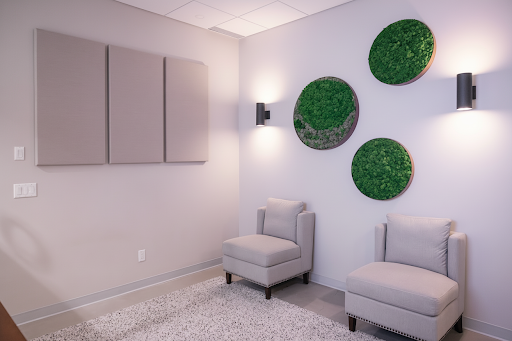
Your first session is about creating space for you to be honest about what’s going on. Your counsellor will want to understand your experience, what brought you here, what your pregnancy or postpartum journey has looked like, and what feels most pressing right now. There’s no pressure to have it all figured out. You don’t need to arrive with a diagnosis or even clear language for what you’re feeling. That’s what the work is for.
Our Collaborative Approach
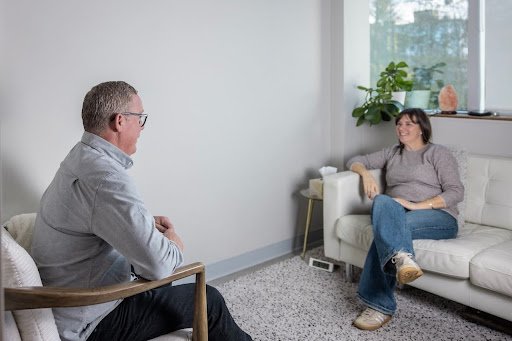
After the first session, you and your counsellor will shape the work together. Some clients want to focus on immediate coping, managing anxiety, getting through the day. Others want to go deeper into what’s underneath. Many end up doing both, and the balance shifts over time. Your counsellor follows your lead while also bringing their clinical expertise to the process. It’s a real collaboration, not a program you’re put through.

Confidentiality
Everything you share remains confidential within legal and ethical boundaries. Your counsellor will walk through all of this in your first session so there are no surprises. This is especially important for perinatal clients, because so much of what you might be feeling, intrusive thoughts, ambivalence about parenthood, anger, disconnection, carries enormous stigma. Your counsellor understands this. You can say the things you’re afraid to say anywhere else.

Flexible, Ongoing Support
Session frequency is up to you. Some clients come weekly, especially in the thick of it. Others shift to biweekly as things stabilize. There’s no required schedule. And if life with a newborn means rescheduling, we get it. The goal is sustainable support, not another obligation on your plate.
Frequently Asked Questions
The baby blues are common in the first two weeks after birth, mood swings, crying spells, feeling overwhelmed. They typically resolve on their own. Postpartum depression tends to be more persistent and more intense: deep sadness, anxiety, difficulty bonding with your baby, changes in sleep and appetite beyond what’s explained by having a newborn. If you’re past the two-week mark and things aren’t lifting, or if what you’re feeling is interfering with your ability to function, it’s worth reaching out. You don’t need a diagnosis to start counselling.
Yes. Postpartum depression and anxiety affect partners too, regardless of gender. The transition to parenthood is a major life shift for everyone involved, and partners can experience their own grief, anxiety, identity disruption, and relationship strain. Our counsellors work with all parents, not just the birthing parent.
Not at all. Prenatal anxiety and depression are more common than most people realize, and they don’t always resolve after birth. Starting counselling during pregnancy can help you build support and understanding before the postpartum period, which is especially valuable if you have a history of mental health challenges, trauma, or pregnancy loss.
We’re not anti-medication, for some people, medication is an important part of the picture, and we’ll never discourage you from exploring that with your doctor. What counselling offers is something different: a space to understand what’s driving your experience, process what you’re going through, and develop internal resources that support you long-term. Many of our clients find that counselling and medication work well together. Others choose one or the other. There’s no judgment either way.
It depends entirely on you, your history, what you’re working through, and what feels right. Some clients come for a few months during a particularly intense stretch. Others stay longer because the work evolves as their experience of parenthood evolves. We don’t set a number of sessions in advance, and we’ll never push you out the door or keep you longer than you need.
Yes. We offer virtual counselling throughout British Columbia, and many perinatal clients prefer it. Getting out of the house with a newborn (or while dealing with pregnancy fatigue) can feel like a monumental task. Virtual sessions remove that barrier without compromising the quality of the work.
Absolutely. Babies are welcome. They cry, they need to eat, they need to be held, your counsellor understands all of that and won’t be thrown off by it. Some clients prefer bringing their baby, while others appreciate the session as time for themselves. Either is fine.
Tell us. The therapeutic relationship matters enormously, especially for this kind of work. If something isn’t clicking, we won’t take it personally. We’ll help you find another counsellor on our team who might be a better match. That’s exactly what the free consultation is designed to help with, so you don’t have to commit before you’re ready.
If you’re asking this question, that’s worth paying attention to. You don’t need to be in crisis to benefit from counselling. A lot of perinatal suffering happens in the space between “I’m fine” and “I’m falling apart” and that in-between deserves support too. There’s no threshold you have to cross.
Yes. Birth trauma is something our counsellors are experienced with, and it doesn’t have to meet anyone else’s definition of “traumatic” to be valid. If your birth experience left you with distressing memories, fear about future pregnancies, or emotional responses that feel disproportionate to what happened, counselling can help you process that in a way that’s safe and paced for you.