Relationship Issues Counselling in Langley & Vancouver
Relationships shape how we experience the world, and when they’re struggling, everything feels harder. At Lavender Counselling, we help you understand the patterns underneath the conflict so you can build the connection you’re actually looking for.
Serving Langley and the Lower Mainland since 2012
Relationship Issues
You know something’s off. Maybe it’s the same argument that keeps circling back, no matter how many times you try to talk it through. Maybe it’s the silence that’s settled in, not angry, exactly, just… distant. Or maybe you’re not even sure what’s wrong. You just know that the people closest to you feel far away.
Relationship problems don’t always announce themselves with a big dramatic moment. Sometimes it’s a slow drift. You stop sharing the small things. Resentment builds in places you didn’t expect. You start wondering if this is just what relationships look like after a while, or whether you’re the one who’s broken.
After more than thirteen years working with people in Langley, Vancouver, and across the Lower Mainland, we’ve seen this clearly: relationship struggles aren’t a sign that something is wrong with you. They’re often the natural result of old patterns, unspoken needs, and the ways we learned (or didn’t learn) to connect with other people. At Lavender Counselling, we don’t treat your relationship difficulties as a problem to diagnose. We see them as communication that’s trying to happen, even when the words aren’t coming out right.

We offer relationship counselling both in-person at our Langley and Vancouver offices and through secure virtual sessions across British Columbia. Whether you’re navigating a specific conflict or trying to understand a pattern that keeps showing up in your life, we’re here to work alongside you.
Challenges We Help With
Communication That’s Gone Sideways
- Conversations that escalate into arguments before you even know what happened
- Shutting down or going silent when things get tense
- Feeling like you’re speaking a completely different language than your partner, family member, or friend
- Walking on eggshells because you’re not sure what’s safe to bring up
- Saying “I’m fine” when you’re anything but
Emotional Distance and Disconnection
- Feeling lonely even when you’re in the same room
- Loss of emotional or physical intimacy that you can’t quite explain
- Going through the motions of a relationship without actually feeling connected
- Avoiding deeper conversations because they feel pointless or risky
- Wondering if the closeness you used to have is gone for good
Repeating Patterns You Can’t Seem to Break
- Choosing the same kind of relationship dynamics over and over
- Falling into caretaking, people-pleasing, or fixing roles
- Attracting or staying in relationships that leave you drained
- Recreating family dynamics in your adult relationships without realizing it
- Knowing what you should do differently but not being able to follow through
Trust and Safety
- Recovering from betrayal, infidelity, or broken promises
- Difficulty trusting others, or trusting yourself in relationships
- Hypervigilance about your partner’s behaviour or intentions
- Fear of being abandoned or rejected if you show who you really are
- Struggling to feel safe enough to be vulnerable
Boundaries and Self-Worth
- Difficulty saying no or expressing what you actually need
- Losing yourself in relationships, your identity disappears
- Tolerating treatment that you know isn’t okay
- Guilt or anxiety when you try to set a boundary
- Confusion about what healthy relationships even look like
Life Transitions and Relationship Stress
- Navigating a new relationship stage, like moving in, marriage, or parenthood
- Managing relationship strain from job loss, illness, or grief
- Adjusting to changes in family structure, like blended families, separation, or divorce
- The impact of caregiving on your closest relationships
- Growing apart from someone you still care about
How We Support Relationship Issues
Every person who walks through our door brings a different story. We don’t apply a one-size-fits-all model to your relationships because that doesn’t work. What we do is get curious alongside you about what’s actually going on underneath the surface.
Get to Know the Problem
Before we can help, we need to understand. Not just the arguments or the distance, but the full picture, your history, your relationship patterns, the moments that shaped how you connect with people. We’ll take time to hear your story without rushing toward solutions.
“The relationship that matters most — and the one we often overlook — is the one you have with yourself.”
Assess the Root Cause
Most relationship issues aren’t really about the thing you’re fighting over. They’re about unmet needs, old wounds, and protective patterns that made sense at one point in your life but are now getting in the way. We help you trace those threads back to their origins, not to place blame, but to build understanding.
“When you understand why you respond the way you do, you gain the freedom to choose something different.”
Treat From the Root
Relationship patterns don’t just live in your head. Research consistently demonstrates that early attachment experiences shape our nervous system responses in close relationships, affecting how we react to perceived threat, manage emotional closeness, and regulate ourselves during conflict (Porges, 2011; Schore, 2019). This is why talking about problems often isn’t enough on its own. Our counsellors may integrate body-based and somatic approaches to help you notice and shift the automatic responses that drive disconnection, so you can show up differently in the moments that matter.
“Real change in relationships happens when you can feel safe enough in your body to stay present — even when things get uncomfortable.”
Our Approach Helps You:
✓ Understand the patterns driving your relationship struggles, not just manage the symptoms
✓ Develop genuine communication skills that go beyond surface-level techniques
✓ Rebuild trust and emotional safety, with others and with yourself
✓ Set boundaries that protect your wellbeing without shutting people out
✓ Navigate conflict as a pathway to deeper connection rather than something to avoid
✓ Build relationships grounded in mutual respect, honesty, and authentic intimacy
Our Counselling Team
Our team includes registered clinical counsellors who work with relationship issues. Each brings unique training and expertise in evidence-based modalities including:
- Emotion-Focused Therapy (EFT)
- Attachment-based and relational therapy
- Trauma-informed, body-centred approaches
- Accelerated Experiential Dynamic Psychotherapy (AEDP)
- Person-centred and humanistic therapy
- Somatic awareness and nervous system regulation
- Mindfulness and self-compassion practices
Our counsellors work with:
- Teens, adults, and older adults experiencing relationship difficulties
- Couples navigating conflict, disconnection, or major transitions
- Individuals exploring patterns in friendships, family relationships, and romantic partnerships
- Parents working through relational strain with their children
- Those healing from relational trauma, betrayal, or attachment wounds
Find Your Relationship Counsellor
The right therapeutic relationship is essential for this kind of work. Use our therapist selector tool to find counsellors whose expertise, approach, and availability match what you’re looking for.
Why Choose Lavender Counselling for Relationship Issues?
Relational, Person-Centered Approach
Body-Based, Root-Level Healing
Find Your Perfect Fit
Consistent, Quality Care
No Artificial Timelines
Flexible Access
Insurance Coverage
Deep Community Roots
What To Expect In Relationship Issues Counselling

Your First Session
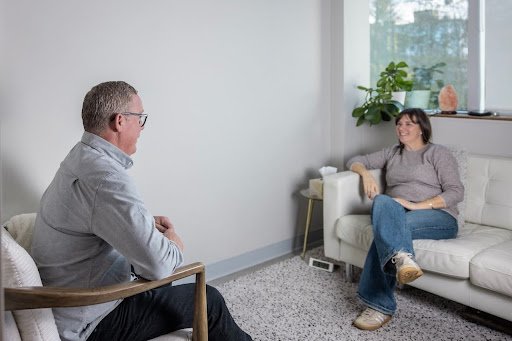
Your first session is about building a foundation. Your counsellor will want to understand what brought you in, not just the current situation, but the broader context of your relationships and your life. There’s no pressure to share everything at once. This is a space where you can go at your own pace, and your counsellor will follow your lead. You might talk about what’s happening now, or you might end up somewhere you didn’t expect. Both are fine.
Our Collaborative Approach
Therapy for relationship issues isn’t something that’s done to you, it’s something we do with you. Your counsellor will bring their training and experience, but you bring the expertise on your own life. Together, you’ll explore the patterns at play, try new ways of understanding old dynamics, and build the skills you need to create healthier connections. Some sessions will focus on the relationships around you. Others might turn inward. That’s part of the process.

Confidentiality
Everything you share remains confidential within legal and ethical boundaries. Your counsellor will walk through all of this in your first session so there are no surprises. This matters particularly with relationship work, where you might be talking about people you love, or people who have hurt you.

Flexible, Ongoing Support
Some clients come weekly. Others shift to biweekly once things start to stabilize. There’s no rigid schedule, we adjust based on what you need and what’s happening in your life. And when you’re ready to step back from regular sessions, we’re still here if something comes up down the road.
Frequently Asked Questions
Every relationship has rough patches, that’s not what brings most people through our door. People tend to reach out when they notice the same problems cycling back, when their usual strategies aren’t working anymore, or when the disconnect is starting to affect their daily life and wellbeing. There’s no threshold of “bad enough.” If your relationships are causing you distress, that’s a good enough reason to talk to someone.
Both. A lot of people assume relationship counselling means couples counselling, but some of the most impactful relationship work happens one-on-one. Individual sessions let you explore your own patterns, attachment history, and emotional responses without the pressure of navigating someone else’s reactions in the room. That said, we do offer couples work as well, and your counsellor can help you figure out what makes sense for your situation.
Most people have already spent a lot of time thinking and talking about their relationship problems. What’s often missing is the body-level piece, the nervous system patterns that drive your automatic responses in relationships. Our counsellors integrate somatic and body-based approaches alongside relational therapy, so you’re not just gaining insight, you’re actually shifting the patterns in your system that keep pulling you back into the same dynamics.
It depends, and we know that’s not the most satisfying answer. Some clients come for a few months to work through a specific situation. Others stay longer to unpack deeper relational patterns. We don’t set artificial timelines or push you toward a finish line. You’ll know when you’re ready, and we trust that.
Yes. We offer secure virtual sessions for clients anywhere in British Columbia. Some people prefer the convenience, others like having a bit of physical distance for this kind of vulnerable work. Both in-person and virtual sessions are equally effective.
Tell us. Seriously, this is exactly what our free consultation is for, and it’s something we actively encourage. The therapeutic relationship is the foundation of this work, and if it doesn’t feel right, we’ll help you connect with another counsellor on our team. No guilt, no pressure.
That’s more common than you’d think. You don’t need your partner’s participation to make meaningful changes in how you relate to others. Individual therapy can shift relational dynamics in powerful ways, often, when one person starts doing things differently, the whole system begins to move.
No. That’s not our role, and honestly, it wouldn’t serve you if we did. What we will do is help you get clear on what you need, what you’re willing to accept, and what feels aligned with your values. The decisions are always yours.
If you’re asking this question, that’s usually a sign that something deserves attention. You don’t need to be in crisis to benefit from therapy. In fact, working on relationship patterns earlier, before things hit a breaking point often leads to better outcomes.