
Suicidal Ideation Counselling in Langley
When your mind keeps circling back to thoughts of ending your life, the weight of that can feel unbearable, and isolating. At Lavender Counselling, we don’t treat suicidal thoughts as something to suppress or rush past. We help you understand what those thoughts are trying to tell you, so you can find your way back to ground that feels solid.
Serving Langley and the Lower Mainland since 2012
Suicidal Ideation
Suicidal thoughts don’t always look the way people expect. Sometimes it’s not a plan or a dramatic moment, it’s a quiet, persistent pull. A feeling that the people around you would be better off. A kind of exhaustion that sleep doesn’t touch. Maybe it’s a thought that drifts through so often you’ve stopped being alarmed by it, which is alarming in its own way.
You may have tried to push these thoughts away. Told yourself to think positive, to focus on what you have, to just get through the day. And maybe you do get through the day. But the thoughts keep coming back, and the gap between you and the people in your life keeps growing. That’s not a willpower problem. It’s a signal that something needs more attention than you can give it alone.
At Lavender Counselling, we see suicidal ideation not as a diagnosis to manage but as a signal, your mind and body communicating that something has become too much to carry alone. That could be grief, trauma, chronic stress, relational pain, or any number of things that have accumulated beyond your capacity to process. Our work isn’t about convincing you to feel differently. It’s about sitting with you in the reality of what you’re experiencing and, together, finding what makes staying worth it, on your terms.

We offer in-person counselling at our Langley offices and virtual sessions for clients throughout British Columbia. Whether you’re in Langley, Surrey, Maple Ridge, Abbotsford, or anywhere else in BC, our team can support you.
Challenges We Help With
Persistent Thoughts and Urges
- Recurring thoughts about ending your life, whether vague or specific
- Feeling drawn toward self-harm as a way to manage emotional pain
- A sense of being “trapped” with no other way out
- Intrusive images or fantasies about death or dying
- Thinking about suicide so frequently it feels almost normal
Emotional Pain and Overwhelm
- Emotional pain that feels physically unbearable
- Numbness or disconnection, feeling like you’re already gone in some way
- Intense shame or self-hatred that doesn’t let up
- A deep sense of hopelessness about the future
- Feeling like you’ve exhausted every option
Withdrawal and Isolation
- Pulling away from people you care about, even when you don’t fully want to
- Feeling like a burden to your partner, family, or friends
- Hiding the extent of what you’re going through
- Losing interest in things that used to matter to you
Daily Functioning
- Struggling to get through basic tasks, work, eating, hygiene
- Sleep disruption: either can’t sleep or sleeping far too much
- Difficulty concentrating or making even small decisions
- Going through the motions without feeling present in your own life
- Struggling to feel any sense of meaning or purpose in life
Relationship and Social Impact
- Conflict or distance in your closest relationships
- Feeling misunderstood when you try to talk about what you’re experiencing
- Difficulty trusting that anyone can actually help
- Avoiding reaching out because you don’t want to be hospitalized or judged
How We Support Suicidal Ideation
We approach every person and every story as unique. There’s no one-size-fits-all protocol for suicidal ideation, because the experiences driving these thoughts are different for everyone. What we offer is a consistent, relational approach that takes your experience seriously, without panic, and without rushing you.
Get to Know the Problem
Before anything else, we want to understand your world. Not just the suicidal thoughts, but the full picture, what’s happening in your relationships, your body, your history, your daily life. We move at your pace, and we don’t push you to disclose more than you’re ready to share.
“We listen for the story underneath the crisis — because understanding what’s driving the pain is where real support begins.”
Assess the Root Cause
Suicidal ideation rarely exists in isolation. It often sits on top of layers, unprocessed grief, relational wounds, chronic stress, trauma, or a sense of disconnection from yourself and others that’s built up over time. Our counsellors work collaboratively with you to untangle what’s underneath, so the work addresses what’s actually driving the pain rather than just managing symptoms on the surface.
“Suicidal thoughts are often the tip of something much deeper. We help you get to what’s actually underneath.”
Working With the Body’s Crisis Response
When someone is experiencing suicidal ideation, it’s not just a thinking problem. Research in affective neuroscience has shown that suicidal states often involve significant nervous system dysregulation, the body may be stuck in states of overwhelming arousal or profound shutdown. Emotional pain registers in the brain in ways that overlap with physical pain, which is part of why it can feel so unbearable and all-consuming.
Our counsellors use body-aware, trauma-informed approaches to help you develop the capacity to tolerate distress and regulate your nervous system. This isn’t about replacing talk therapy, it’s about recognizing that when your body is in a crisis state, words alone aren’t always enough.
“When your whole system is in survival mode, we work with both mind and body to help you find your way back to a place of safety.”
Our Approach Helps You:
✓ Develop a safety framework that actually fits your life, not a generic plan on a card
✓ Understand the triggers and patterns underneath your suicidal thoughts
✓ Build your capacity to tolerate intense emotional pain without shutting down or acting on urges
✓ Reconnect with the parts of your life and relationships that give you a reason to stay
✓ Process the underlying grief, trauma, or relational wounds fuelling the crisis
Our Counselling Team
Our team includes registered clinical counsellors who work with suicidal ideation. Each brings unique training and expertise in evidence-based modalities including:
- Trauma-informed, person-centred therapy
- Emotion-focused approaches (AEDP, EFT)
- Attachment-based and relational therapy
- Somatic and body-centred awareness
- Experiential and humanistic approaches
- Mindfulness and self-compassion practices
- Crisis intervention and safety planning
Our counsellors work with:
- Teens and adults experiencing passive or active suicidal thoughts
- Clients managing co-occurring depression, trauma, anxiety, or grief
- Individuals in acute crisis as well as those living with chronic suicidal ideation
- First responders, veterans, and others in high-stress roles
- People who’ve been impacted by the suicide of someone they love
Find Your Counsellor
The right therapeutic relationship is essential for this kind of work. You need to feel genuinely safe, and that requires the right fit. Use our therapist selector tool to find counsellors whose expertise, approach, and availability match what you’re looking for.
Why Choose Lavender Counselling For Suicidal Ideation?
Relational, Person-Centered Approach
Body-Aware, Trauma-Informed Care
Find Your Perfect Fit
Consistent, Quality Care
No Artificial Timelines
Flexible Access
Insurance Coverage
Deep Community Roots
What To Expect In Suicidal Ideation Counselling
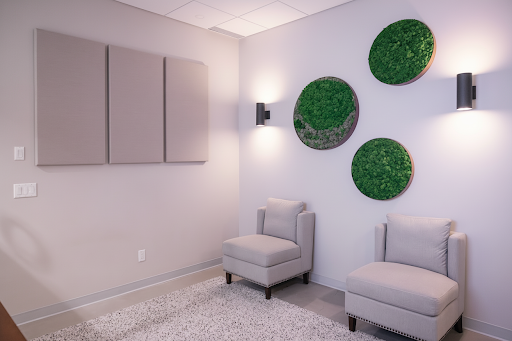
Your First Session
Your first session is about connection, not interrogation. Your counsellor will want to understand what brought you in, what you’re experiencing, and what kind of support feels right to you. They’ll also talk with you about safety, not in a clinical, formulaic way, but as a real conversation about what’s helpful and what’s not. There’s no pressure to share more than you’re ready to. You’re in control of the pace.
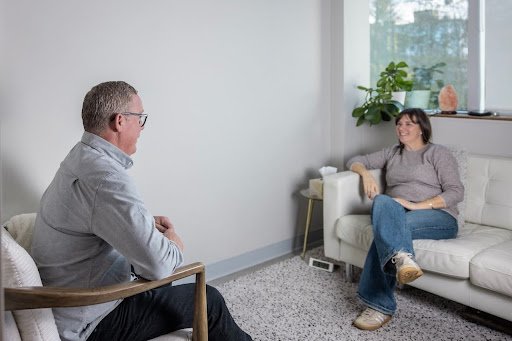
Our Collaborative Approach
After the initial session, you and your counsellor will develop an approach together. This might focus on trauma processing, building distress tolerance, strengthening your relationships, or reconnecting with meaning and purpose, often some combination. The plan adapts as you do. We don’t lock you into a rigid framework.

Confidentiality
What you share in counselling stays between you and your counsellor. There is one important exception: if your counsellor believes there is an imminent risk to your life, they have an ethical and legal obligation to take steps to help keep you safe. We’ll be transparent with you about what that looks like from the start, so there are no surprises. Our goal is always to work with you, not around you.

Flexible, Ongoing Support
Some clients come weekly. Some come more frequently during difficult periods and less often when things stabilize. We work with you to find a rhythm that makes sense. And if you ever feel like you need to switch things up, frequency, format, or even therapist, just say so.
Frequently Asked Questions
Suicidal ideation exists on a spectrum. On one end, there are passive thoughts, things like “I wish I wasn’t here” or “it would be easier if I didn’t wake up,” without a plan or intention to act. On the other end are active thoughts with specific plans. Both are worth taking seriously, and both are things we work with. You don’t need to be “in crisis” to reach out.
Crisis intervention is essential when someone is in immediate danger, and we support clients in acute crisis. But our work goes deeper than stabilization. We’re interested in what’s underneath the suicidal thoughts: the relational wounds, the trauma, the accumulated pain. Our approach addresses the root causes so that you’re not just coping with suicidal ideation, you’re actually moving through the things that are driving it.
This is one of the most common fears, and it keeps a lot of people from getting help. Our counsellors are experienced in working with suicidal ideation and understand the difference between ongoing suicidal thoughts and imminent danger. Having suicidal thoughts does not automatically mean hospitalization. We work collaboratively with you on safety, and hospitalization would only be considered if your life were in immediate danger and there were no other options.
There’s no standard timeline. Some clients find significant relief within a few months. Others, especially those dealing with long-standing trauma or chronic suicidal ideation, may benefit from longer-term support. We don’t impose session limits, and we’ll check in regularly about how the work is feeling for you.
Yes. We offer virtual sessions throughout British Columbia. Many of our clients find that virtual counselling works well for them, especially if getting to an office feels like a barrier during difficult periods. In-person sessions are available at our Langley offices.
Tell us. This is not the kind of work where you can push through with someone who doesn’t feel right. We offer a free consultation specifically so you can get a sense of the therapist before committing. And if things don’t feel right after you’ve started, we’ll help you find someone else on our team, no hard feelings, no awkward conversations.
If you’re having suicidal thoughts at all, even passive ones, even ones that come and go, that’s enough. You don’t need to be in crisis to deserve support. In fact, reaching out before things escalate is one of the most effective things you can do. There’s no minimum threshold here.
Not all therapy is the same. If you’ve experienced approaches that felt surface-level, overly clinical, or focused on worksheets and coping strategies without actually getting to the root of the pain, we understand why you’d be skeptical. Our approach is relational and goes deeper, we’re not interested in putting a bandage on a crisis. We want to understand why the crisis exists and work with you from there.
No. Your counselling is confidential. The only exception is if there’s an imminent risk to your safety, and even then, we work with you first. We don’t contact family members, employers, or anyone else without your knowledge and consent, except in circumstances where we’re legally obligated to protect your safety.