
A few weeks ago, I had a medical emergency in my home. I remember feeling scared and confused, unsure whether my loved one would be okay. I did everything I could recall from my early lifeguarding training, but quickly reached the edge of what I was able to manage on my own.
Everything felt very vulnerable, and I had very little sense of control. I knew I was out of my depth and needed help, so I called 911. From the moment I heard the dispatcher’s voice on the line and she began walking me through what to do, I felt a sense of calm. She reassured me that help was on the way.
The fire department arrived first. They assessed the situation, gathered the details of what had happened, and began stabilizing my loved one. When the paramedics arrived, the teams worked together seamlessly, transferring information and ensuring my loved one was cared for in the way they needed.
In the midst of everything, the fire department and paramedics took the time to make eye contact with me and offer a small smile. On the way to the hospital, the paramedic shared a brief story about her dog. It was a small moment, but it felt grounding and reassuring in the middle of everything that was happening. I felt so relieved to have them in my home taking over care of the situation.
It is one of many moments that happen every day, often without recognition. Much of my career has been devoted to supporting first responders and their families. In that moment, I found myself on the other side of that work, and more aware of the care and responsibility they carry.
May 1 marks Honour National First Responders Day in Canada
It is a day that deserves widespread attention and holds significant meaning for those working within emergency services, as well as for the families and communities connected to them.
As outlined in the Act to Proclaim First Responders Day in Canada:
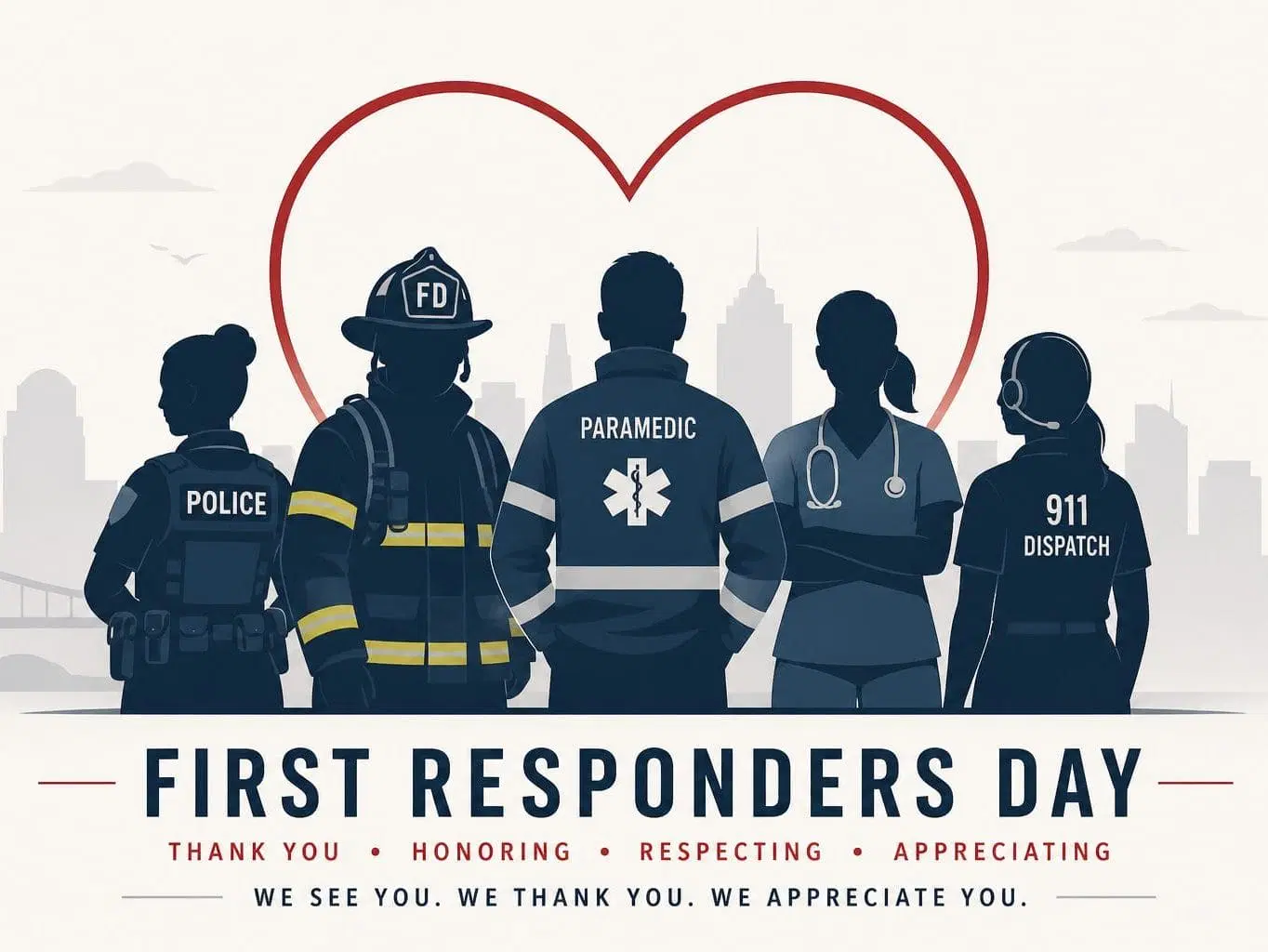
“First responders are those men and women who, in the early stages of an emergency, are responsible for the protection and preservation of life, property, evidence and the environment. They include police officers, firefighters, military personnel, paramedics, medical evacuation pilots, dispatchers, nurses, doctors, emergency medical technicians and emergency managers.
First responders are volunteers and professionals who have dedicated their lives to public service. Their life-saving skills often make the difference between life and death. Their public service deserves to be recognized and honoured.”
The Work That Often Goes Unseen
Much of what first responders do happens outside of public view. They respond to calls that resolve before they become larger crises, helping stabilize situations that could have escalated. Providing direction, containment, and clarity in moments where people may feel overwhelmed or unsure of what to do next.
They are present in homes, on roadsides, in hospitals, in dispatch centres, and in complex environments—coordinating, assessing, responding, and making decisions that shape outcomes in real time. There is also work that happens behind the scenes, including preparing, training, communicating across teams, and maintaining readiness for situations that may or may not come.
For many people, the ability to move through daily life without needing to think about emergency response is, in part, supported by this work.
The Impact of Emergency Service on First Responder Families
First responders are also part of families and relationships that are shaped by this work over time. Family members may see the weight their loved one is carrying and begin to worry, sometimes adjusting their own behaviour to protect them from additional stress at home. At other times, first responders are pulled away from their families to come and care for you and yours.
Partners may notice shifts in energy or availability, and children may not fully understand the work but are aware of its impact. Families adapt, support, and make space in ways that are not always visible. Recognizing first responders also means recognizing the people connected to them, the care, flexibility, and ongoing adjustment that allow this work to continue over time.
What It Means to Honour This Work
Honouring first responders is not only about appreciation in moments of visible crisis. It is about recognizing the ongoing nature of the work, the repeated exposure to situations where something has gone wrong, and the responsibility of stepping in when others cannot.
It is about understanding what allows many of us to move through our lives without anticipating crisis, and acknowledging what sits behind that. This includes recognizing the full scope of the role, as well as the people and systems that support it, both within the work and at home.
It also means taking their work seriously in how we speak about it, how we support it, and how we make space for the realities that come with it.
May 1
Honour National First Responders Day in Canada offers an opportunity to pause and reflect on what exists behind the routines of everyday life. Today, I am pausing to acknowledge the work first responders do, both seen and unseen—for my family, my community, and my country. Please take a moment to do the same.
About the Author
Carolynn Turner, MA, RCC-ACS, is a Registered Clinical Counsellor and Clinical Director specializing in trauma, operational stress injuries, and relational impacts within military and first responder families. She is a co-developer and clinical facilitator of national programs with Wounded Warriors Canada, including the Surviving Families Program (SFP), which supports families who have lost a first responder loved one in the line of duty or to suicide, and the Spousal Resiliency Program (SRP) and its online adaptation.
As founder of Lavender Counselling, Carolynn leads clinical programming and supervision, bringing a systems-based, trauma-informed approach to both individual care and large-scale program development.
Lavender clinicians who provide First Responder Support
- Andrea Colliar, M.Ed., RCC, CCC
- Allison Esaau, M.Ed., RCC, CCC
- Andrew Peterson, MA, CCC
- Brittany Lasanen, MA, CCC
- Carolynn Turner, MA, RCC-ACS
- Chantel Van Vliet, MC, RCC
- Hannah Nguyen, M.Ed., RCC, CCC
- Heidi Maxwell, MA, RCC
- Jenn Moudahi, MA, RCC, CCC
- John Murray, MA, RCC, CCC, CT
- Selena Light, MA, RCC